The devil’s advocate does not need to prove Shakespeare a Protestant. It needs to show that every item in the Catholic case has an ordinary explanation, and that the record of a known Catholic playwright looks different.
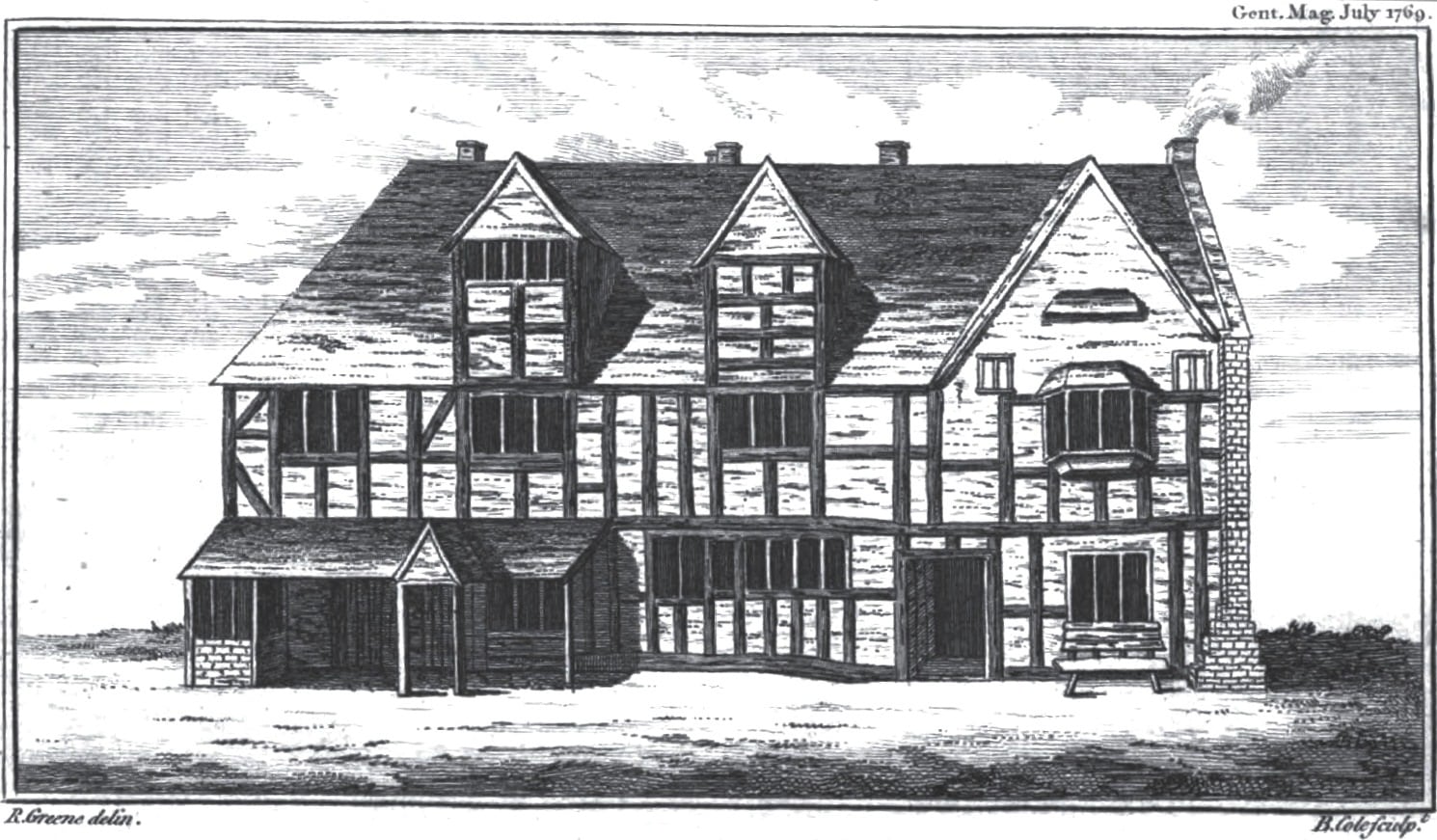
The Henley Street houses in 1769, drawn by Richard Greene and engraved by Benjamin Cole for the Gentleman’s Magazine: the earliest printed view, showing the main house and the western cottage as separate fronts before the restoration.Drawn by Richard Greene, engraved by Benjamin Cole, for the Gentleman's Magazine, 1769. Wikimedia Commons. Public domain.
1. What the case has lost
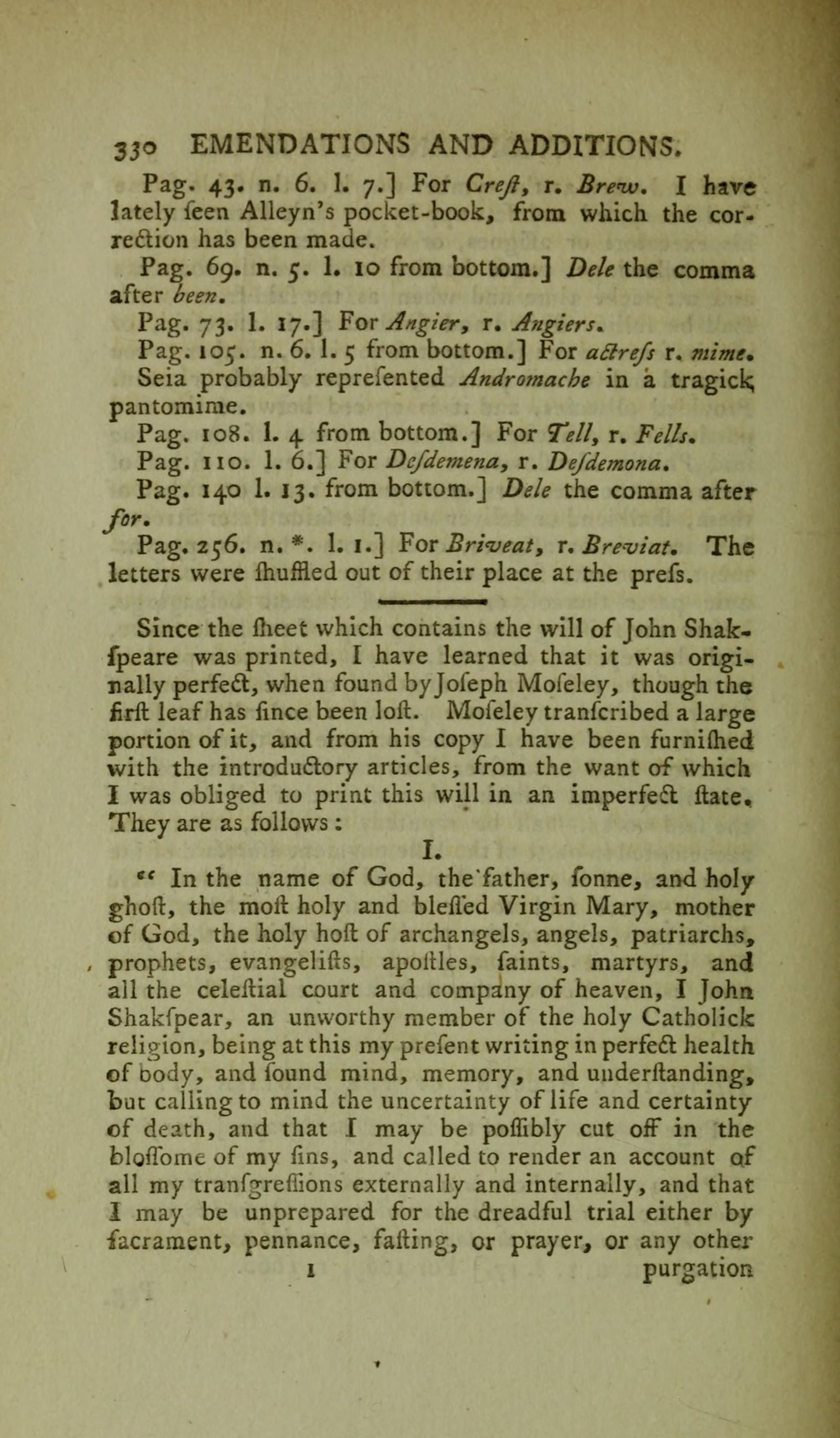
The one document that ever put Catholic words in a Shakespeare parent’s mouth was transmitted by John Jordan, a man who forged old books inscribed “William Shakespeare his Booke” for tourists and enlarged the Lucy ballad. Its naming leaf is Jordan’s. Its body is a formulary first attested in print in Venice in 1613 and in English in 1635, twelve and then thirty-four years after John Shakespeare was dead; Steggle has traced more than eighty editions and none earlier.
Its patron saint, Winifred, is a woman’s devotion whose Warwickshire cult peaked in the 1630s. The instruction that it be buried with the testator was not followed; it was in a roof. Malone, who held it, thought the hand looked thirty years too late for the bailiff. The story that Campion carried Borromeo booklets from Milan in 1580 collapsed when Bearman showed Allen’s 1581 letter concerned the Rheims New Testament, a point the defender Bridgman conceded.
Kastan in 2004 wrote that the testament “has recently been identified as a forgery” and Bate in 2012 called it a late-eighteenth-century forgery. Both overstate, but the direction is right: it is gone as evidence about John.
Malone, 1790, page 330: Articles I and II, printed from the copy John Jordan supplied. Malone never saw this leaf.Edmond Malone, 1790. Internet Archive. Public domain.
Solidthe dating and the provenance problems↓ removes the father’s document
2. John Shakespeare’s public life and the Exchequer
John climbed every rung of the civic ladder from 1556 to 1572, served as bailiff and justice from 1568, and as chamberlain kept the accounts that paid for defacing the chapel images and taking down the rood loft. He baptised eight children in the parish church. His withdrawal from the council in 1577 coincides exactly with Exchequer prosecutions by the informer James Langrake for illegal wool dealing and usury, running from 1569 to about 1583, with one Crown debt of £132, about £20,000 today.
In 1578 the council excused him from the poor rate. In 1578 and 1579 he mortgaged and sold his wife’s inheritance. In 1587 he was arrested and bailed for a £22 debt. The recusancy statute with crippling fines came in 1581, after the collapse began, and Burke found that in neighbouring Worcestershire “few recusants were ruined by the fines”.
When the commissioners listed him in September 1592 they separated him from the “wilful recusants still indicted” and wrote that the nine men in his group “come not to church for fear of process for debt”. Sheriffs could not enter homes but could wait at church. Orlin reads the list as a terror watch list that put John in the debtor category, not the dangerous one. Bearman’s title says it: “A Papist or Just Penniless?” The simplest reading is that a ruined man stopped showing his face.
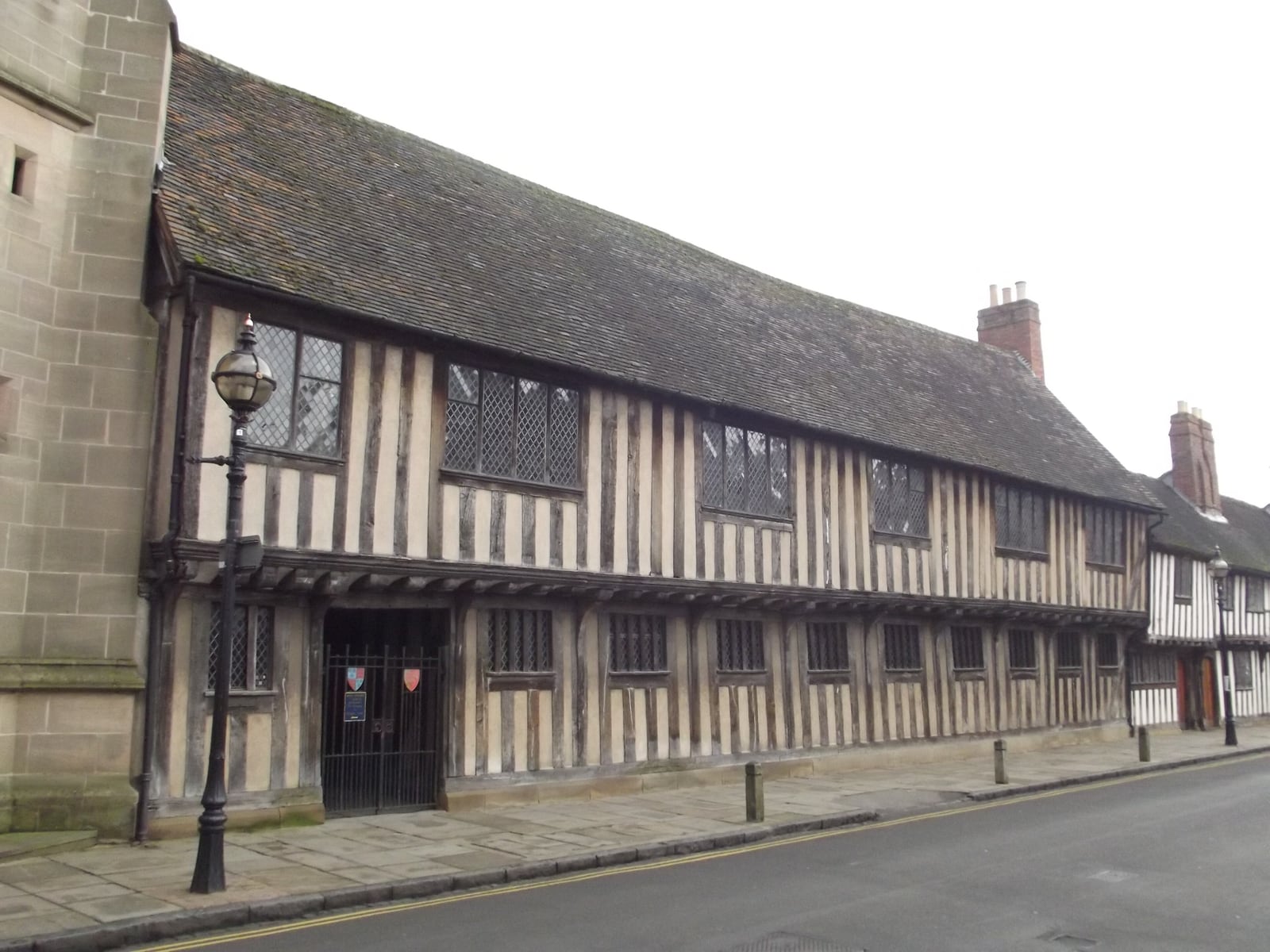
The Guildhall, Church Street, Stratford-upon-Avon. The schoolroom of the King’s New School was on the upper floor; Hunt, Jenkins and Cottom taught here. No school records survive.Elliott Brown, 2013-01-06. Wikimedia Commons. CC BY 2.0.
SolidParry and Enis; the certificate’s own note↓ against the religious reading of 1577 and 1592
The “conspicuously Catholic” family belongs to Park Hall, and the College of Arms itself declined to accept that Mary Arden of Wilmcote descended from it. The heralds drew the Park Hall coat in 1599, then struck it out and substituted another Arden coat. Robert Arden’s Catholic will preamble in 1556 is what every testator used under Mary I.
Not one Wilmcote Arden, Lambert, Webbe, Stringer or Edkins appears in any recusancy record. The in-laws behaved like ordinary litigious kin, not a Catholic network.
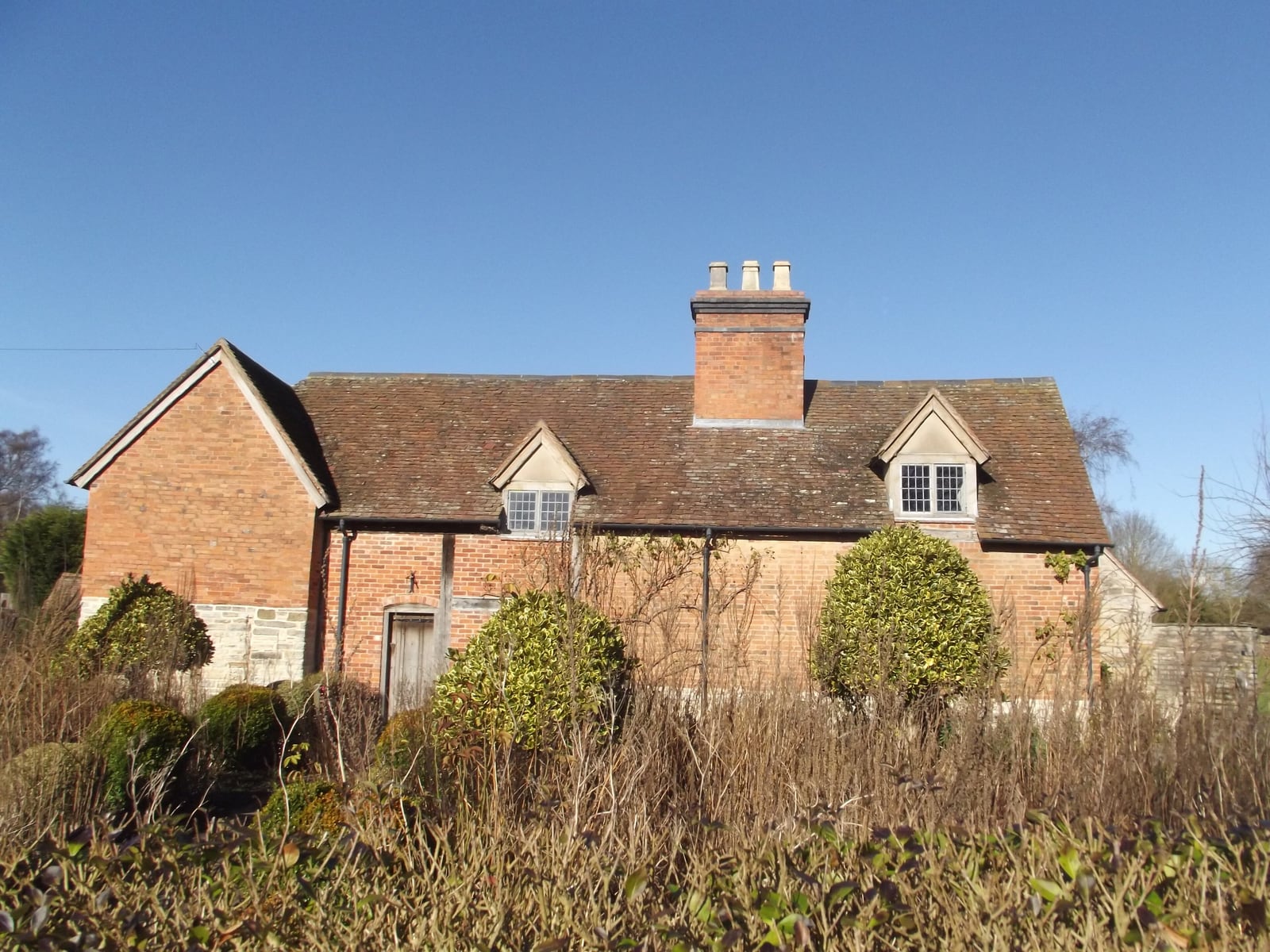
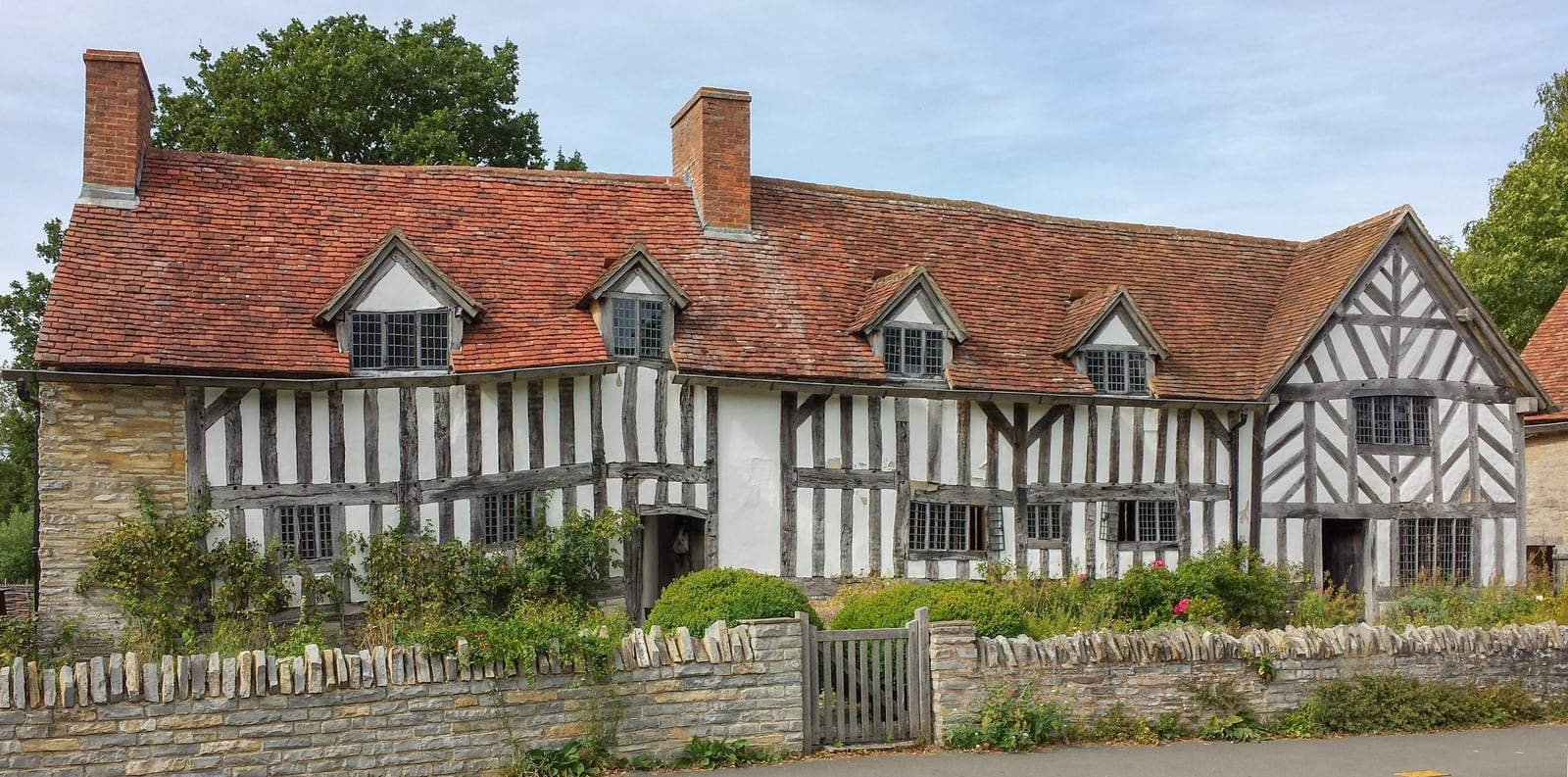
Glebe Farm, Wilmcote, the house identified since 2000 as Mary Arden’s. The building long shown under her name is Palmer’s Farm next door.Elliott Brown, 2013-02-02. Wikimedia Commons. CC BY 2.0.Palmer’s Farm, Wilmcote, shown as Mary Arden’s house from the nineteenth century until 2000.DeFacto, 2013-09-01. Wikimedia Commons. CC BY-SA 4.0.
Disputedthe Park Hall descentLore“the Wilmcote Ardens were conspicuously Catholic”↓ weakens the Arden lineage
Alexander Hoghton’s will of 3 August 1581 asks Sir Thomas Hesketh “to be ffrendlye unto ffoke Gyllome and William Shakeshafte nowe dwellynge with me”, and gives Shakeshafte a 40-shilling life annuity. Nothing in the will says Shakeshafte was young, a player, a schoolmaster, a Catholic or from Warwickshire.
“Shakeshafte” was a common Lancashire surname and an extremely rare Warwickshire one. Bearman found three or four William Shakeshaftes around Preston; Steggle in 2023 named a documented rival, William Shakeshaft of Preston and Cadley, alive in 1581. A 40-shilling life annuity implies an established servant, not a seventeen-year-old. Winstanley found no proof Cottom was Catholic while at Stratford or that he sent anyone north. The ODNB calls the evidence “purely circumstantial”.
The Stratford records require Shakespeare in Warwickshire from mid-1582, so even if he were Shakeshafte the episode cannot be the lost years. The heritage sites have retreated: Hoghton Tower’s own history page makes a joke about Shakespeare and no factual claim.
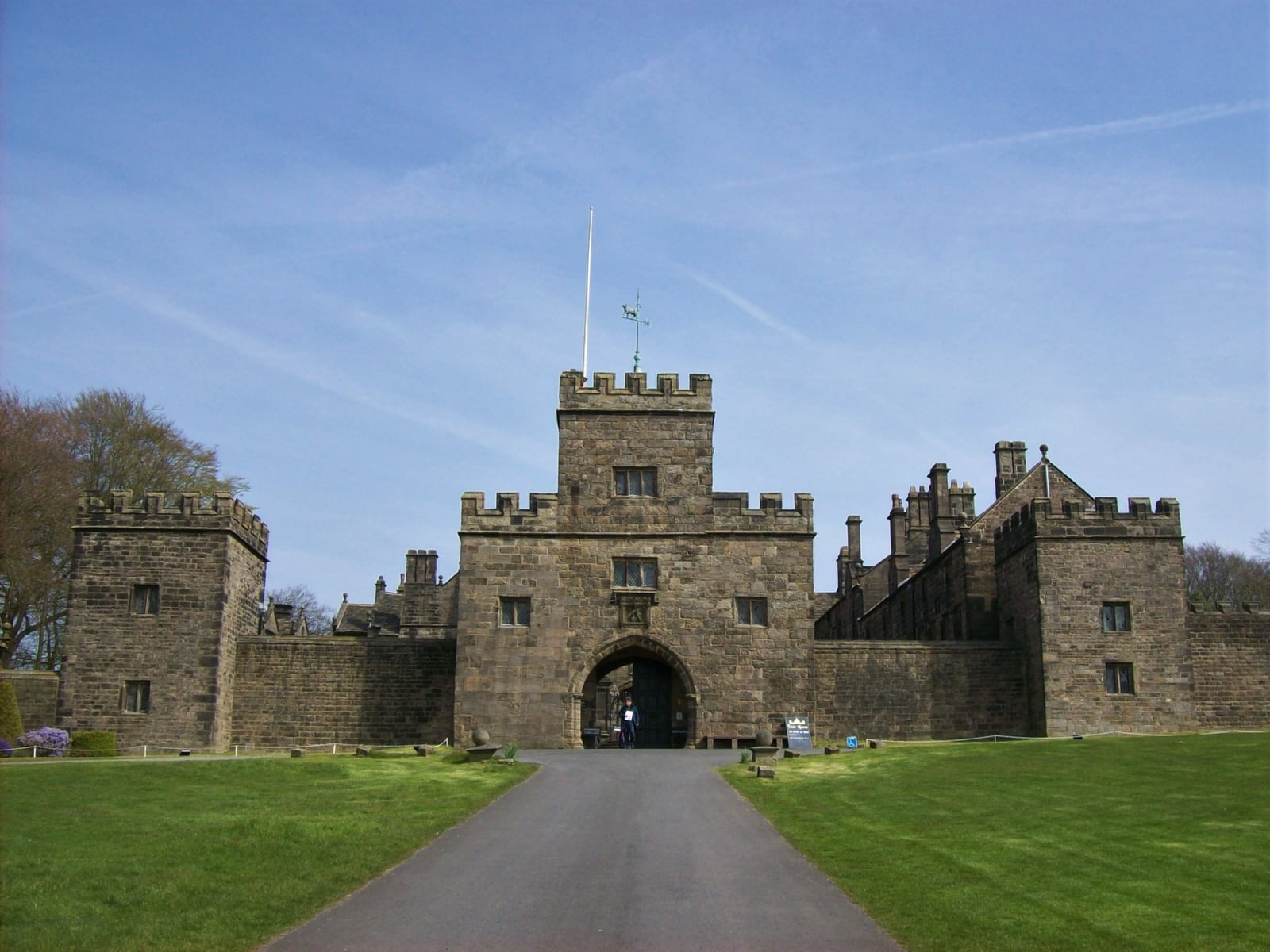
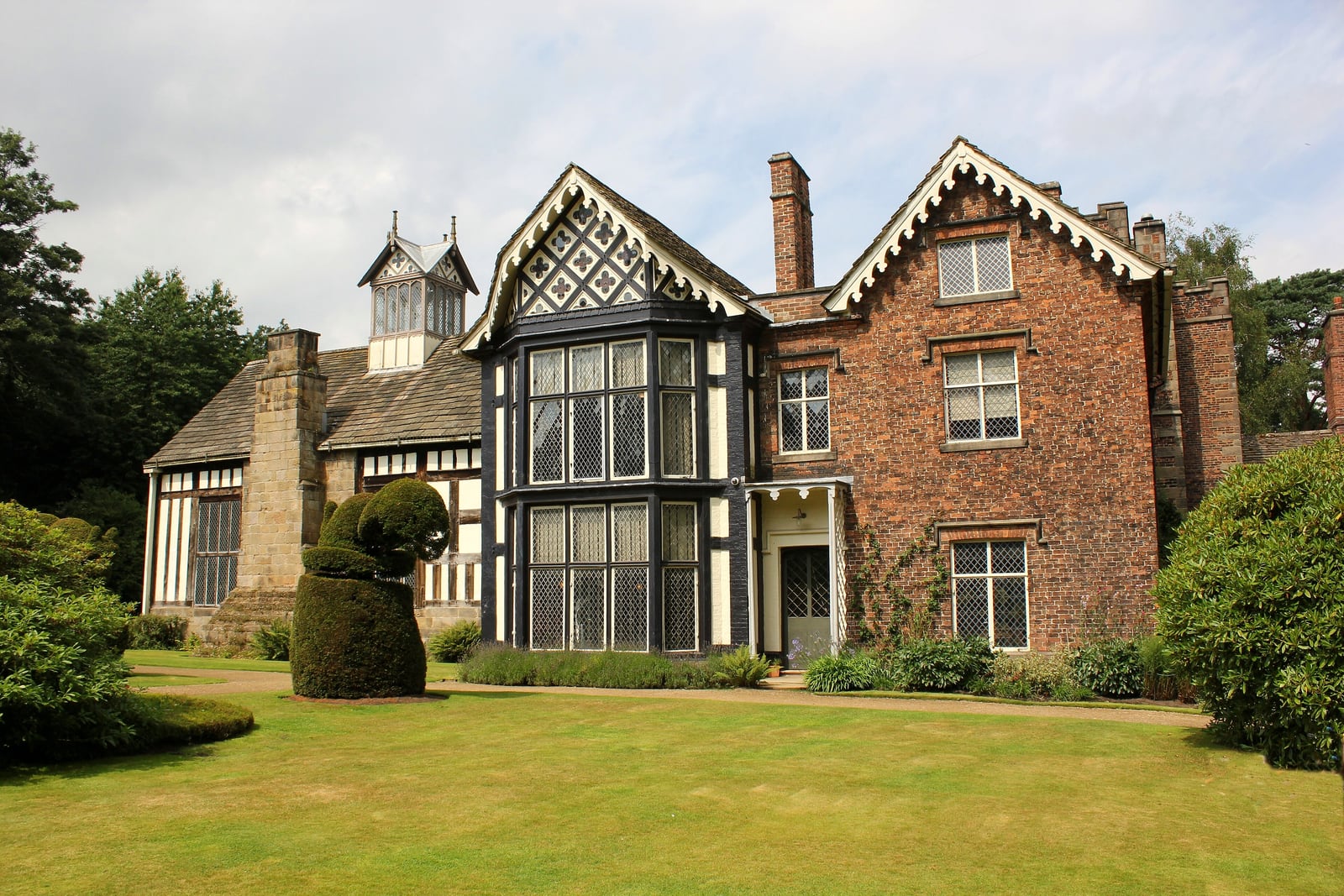
Hoghton Tower, Lancashire. Alexander Hoghton’s will of 3 August 1581 names a William Shakeshafte.Poliphilo, 2019-04-15. Wikimedia Commons. CC0.Rufford Old Hall, Sir Thomas Hesketh’s house, to whom Hoghton commended Shakeshafte.Jeff Buck, 2013-08-01. Wikimedia Commons. CC BY-SA 2.0.
Solidas a nameDisputedas Shakespeare, leaning against↔ open
Susanna’s citation is the only religious proceeding against anyone in the household in Shakespeare’s lifetime, and it was dismissed. Her name is absent from the four other Stratford recusant lists of 1605 to 1607. A year later she married John Hall, who backed the Puritan vicar Thomas Wilson, won a church-court slander suit, and held a licensed pew for “divine service and Sermons” in 1633. Hall died in 1635. Susanna died in 1649 and was buried in the chancel under a stone that calls her “Wise to salvation”, a Protestant idiom from 2 Timothy.
Thurston, a Jesuit, listed against the Catholic thesis in 1912 that the daughters were raised Protestant, that Shakespeare stood godfather in 1608, that the town paid for a preacher at New Place in 1614, that he knew the Bible in a Protestant version, that no legatee could be identified as a Catholic, that he stayed close to Jonson after Jonson’s return to the Church of England, and that he lodged with the Huguenot Mountjoys.
His poems were printed by Richard Field, who printed Calvin’s catechism in Spanish. His 1612 lodging dispute was referred to the elders of the French Protestant church.
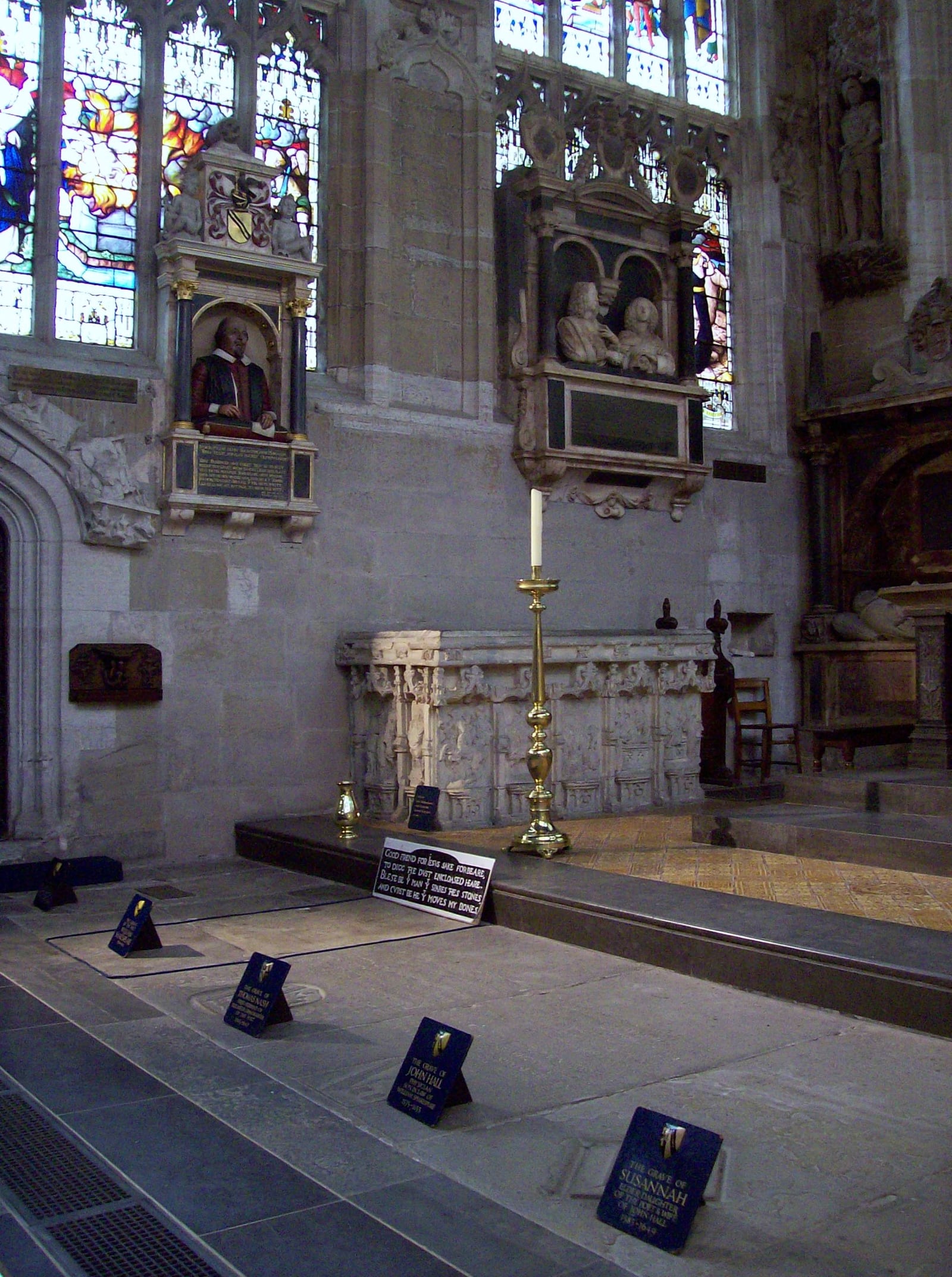
The family graves in the chancel of Holy Trinity: Anne, William, Thomas Nash, John Hall and Susanna Hall, whose epitaph reads Wise to salvation.Len Williams, 2012-10-15. Wikimedia Commons. CC BY-SA 2.0.
The preamble, “hoping and assuredly believing through the only merits of Jesus Christ my Saviour to be made partaker of life everlasting”, is what Rowse called “the Protestant formula”. A Catholic testator of conviction who was free to do so would have invoked the Virgin and the saints.
Alsop’s point that preambles are scribal formulae cuts both ways: the will proves nothing for the Protestant reading, and nothing for the Catholic one. The will names no priest, no Mass, no prayers for his soul and no Catholic bequest. It gives £10 to the poor and rings to three London players.
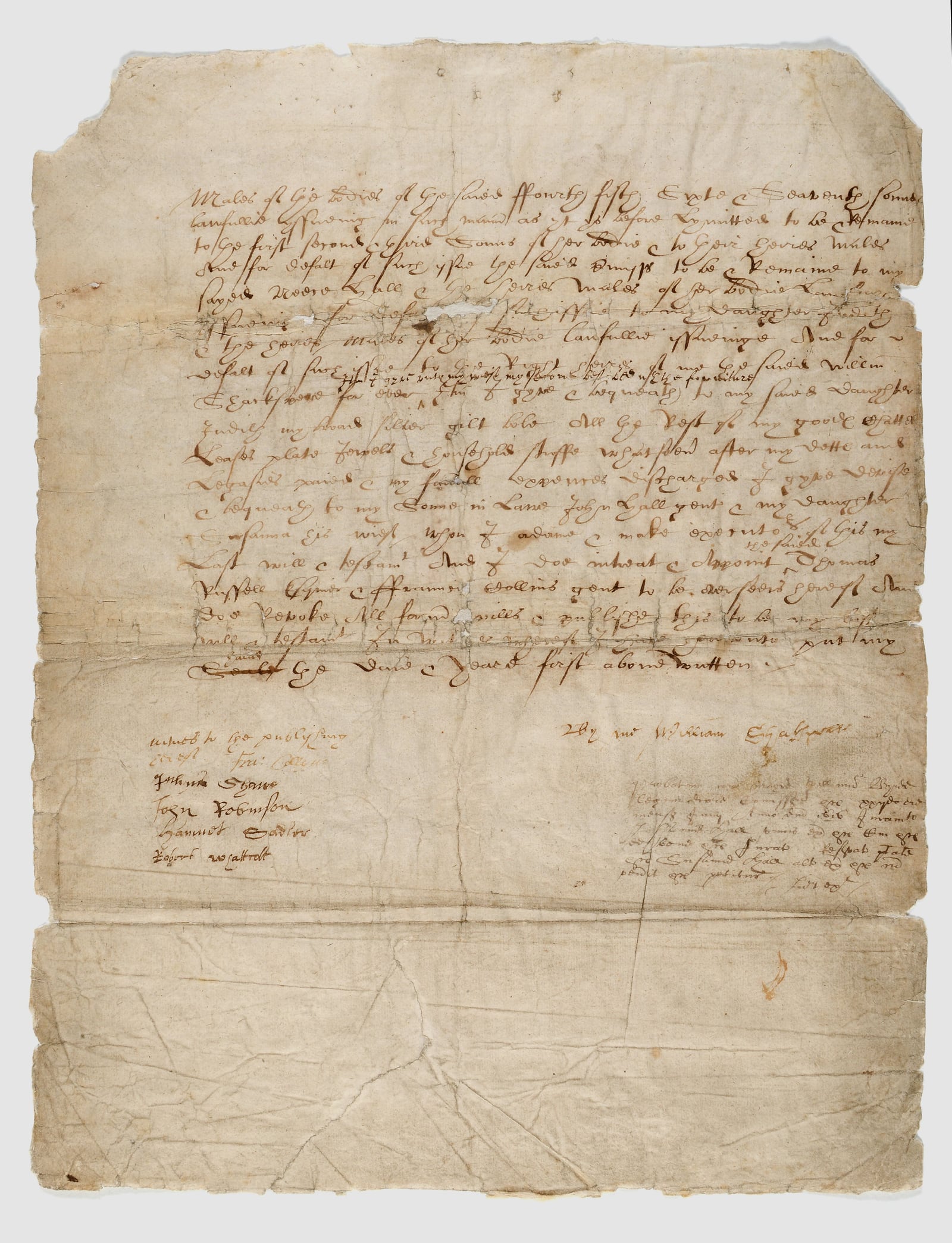
The last sheet of the will, The National Archives PROB 1/4, re-signed 25 March 1616. The preamble is on the first sheet; the mourning rings and Hamnet Sadler’s interlined name are on this one.Written by a scribe and signed by William Shakespeare; The National Archives PROB 1/4, 1616. Wikimedia Commons. Public domain.
Solidthe textDisputedformula or belief↓ weakly against, or neutral
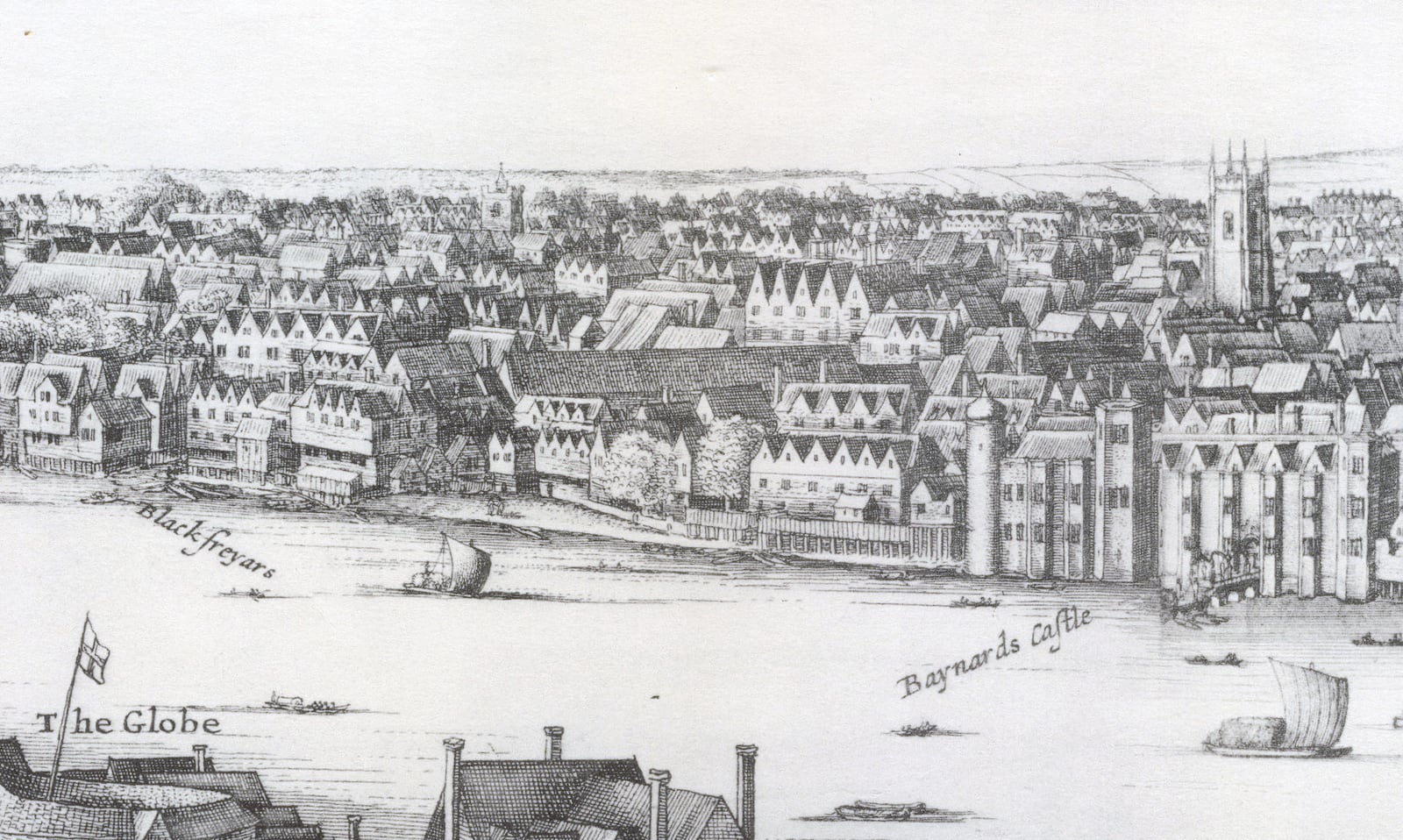
By 1613 the Fortescues were gone and the house had passed through a minstrel’s hands. Shakespeare was a wealthy man investing in Stratford land and tithes, and the gatehouse stood yards from his company’s winter playhouse. The Folger and Shakespeare Documented call it an investment; Schoenbaum called it “an investment, pure and simple”.
In April 2026 Lucy Munro located the house exactly on a 1668 plan, L-shaped over the gate beside the Cock Tavern, and argued the purchase shows continued engagement with London theatre, under five minutes’ walk from the Globe. “John Robinson” is a very common name, and no document ties the tenant to the recusant Robinsons.
The Blackfriars waterfront in Hollar’s Long View, 1647.Wenceslaus Hollar, 1647. Wikimedia Commons. Public domain.
The sentence is appended, without source, to a note that also contains the garbled “Justice Clodpate” and “three louses rampant” deer-poaching story. Davies wrote at least 72 years after the death. “Papist” in 1690s Anglican usage was a loose slur.
No earlier writer says anything of the kind: not Fuller in 1662, not Ward in 1662, not Aubrey around 1680, not Dowdall in 1693, not Rowe in 1709, who collected Stratford traditions. Thurston ended at “must remain forever uncertain” and the Baptist B. G. Collins at “very improbable”.
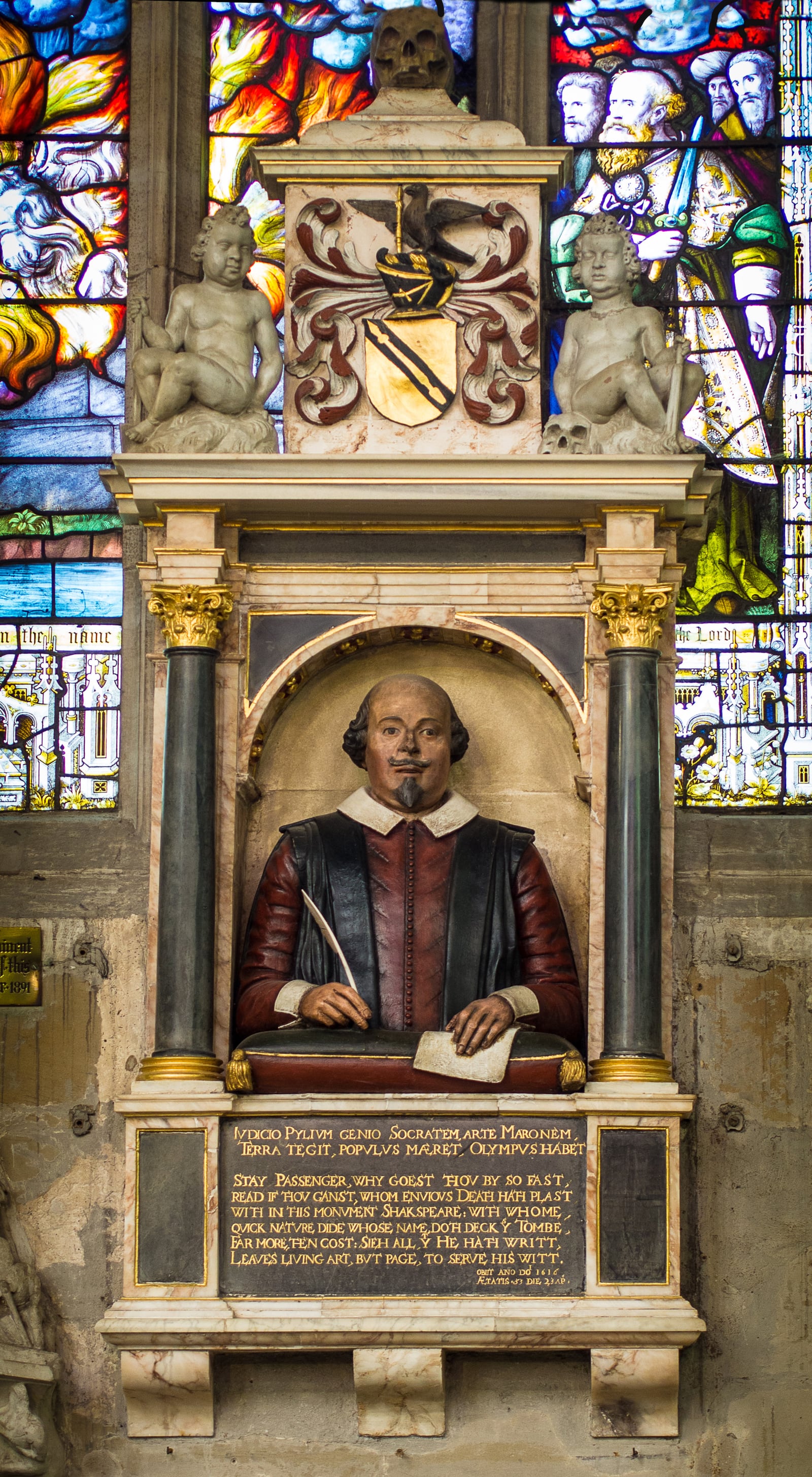
The funerary monument in Holy Trinity, Stratford, by Gheerart Janssen, in place by 1623.Sicinius, 2014-07-29. Wikimedia Commons. CC BY-SA 4.0.
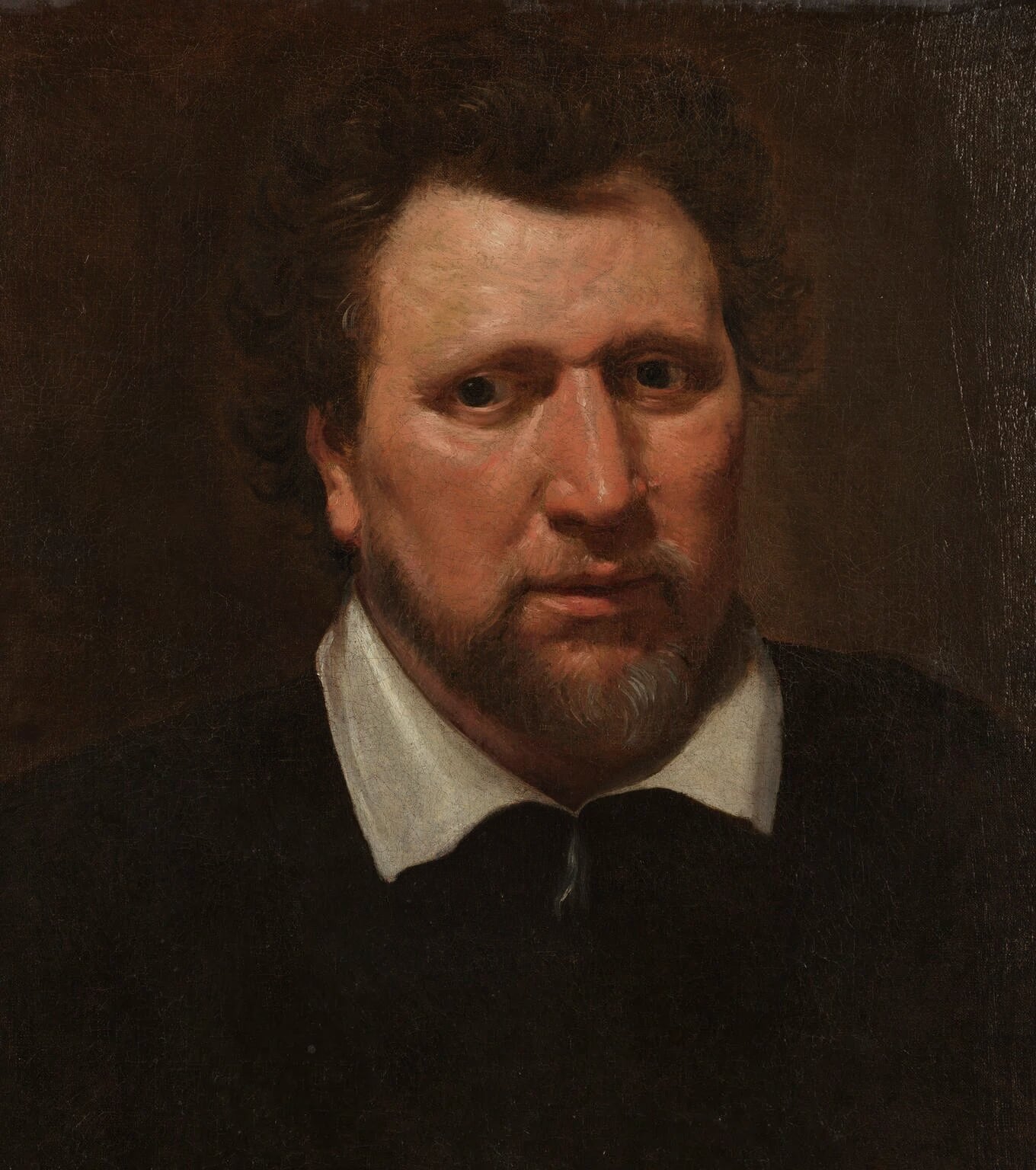
Ben Jonson is the control case. He converted in Newgate in October 1598, was cited by name with his wife before the London Consistory Court in January 1606, admitted avoiding communion, paid thirteen shillings, dined with the Gunpowder plotters, and still wrote the court’s masques before returning to the Church of England in 1610. A dramatist’s Catholicism was survivable under James, and it generated paper.
Shakespeare’s generated none: no citation, fine or religious proceeding against him in Stratford or London in any surviving record, including the Stratford peculiar court act books that survive for 1590 to 1608, when he was often resident. A sharer in the King’s Men and Groom of the Chamber was expected to take communion and could be reported like anyone else.
Ben Jonson, by Abraham van Blyenberch, about 1617. The control case: a Catholic from 1598 to 1610 whose Catholicism generated paper.Abraham van Blyenberch; scan by the National Portrait Gallery, about 1617. Wikimedia Commons. Public domain.
His Bible is the Geneva and the Bishops’ with the Prayer Book Psalter. Shaheen counted 14 Geneva readings in the tragedies and 10 in the histories against 11 from all other versions combined, and Horatio’s “edified by the margent” alludes to the Geneva marginal notes. A man who reaches instinctively for Protestant English Scripture heard it every week of his life.
The one time the canon uses “popish” it is a sneer in the mouth of the atheist Aaron. The one topical Jesuit is the Porter’s equivocator who “could not equivocate to heaven”, a joke at the expense of Henry Garnet weeks after his execution. King John keeps the king’s attack on “corrupted pardon” bought with “vile gold”, lines Colley Cibber in 1745 thought no Catholic could have written. The Virgin Mary is never a devotional presence in the tragedies or comedies.
And the best evidence of how seventeenth-century Catholics read him is the Second Folio at the English College in Valladolid, where a Jesuit censor scrubbed bawdry and oaths, cut Cranmer’s praise of Elizabeth, and excised Measure for Measure entirely, the play Catholic readers now call the most sacramental in the canon. A real Jesuit reading the Folio found nothing covertly Catholic to protect.
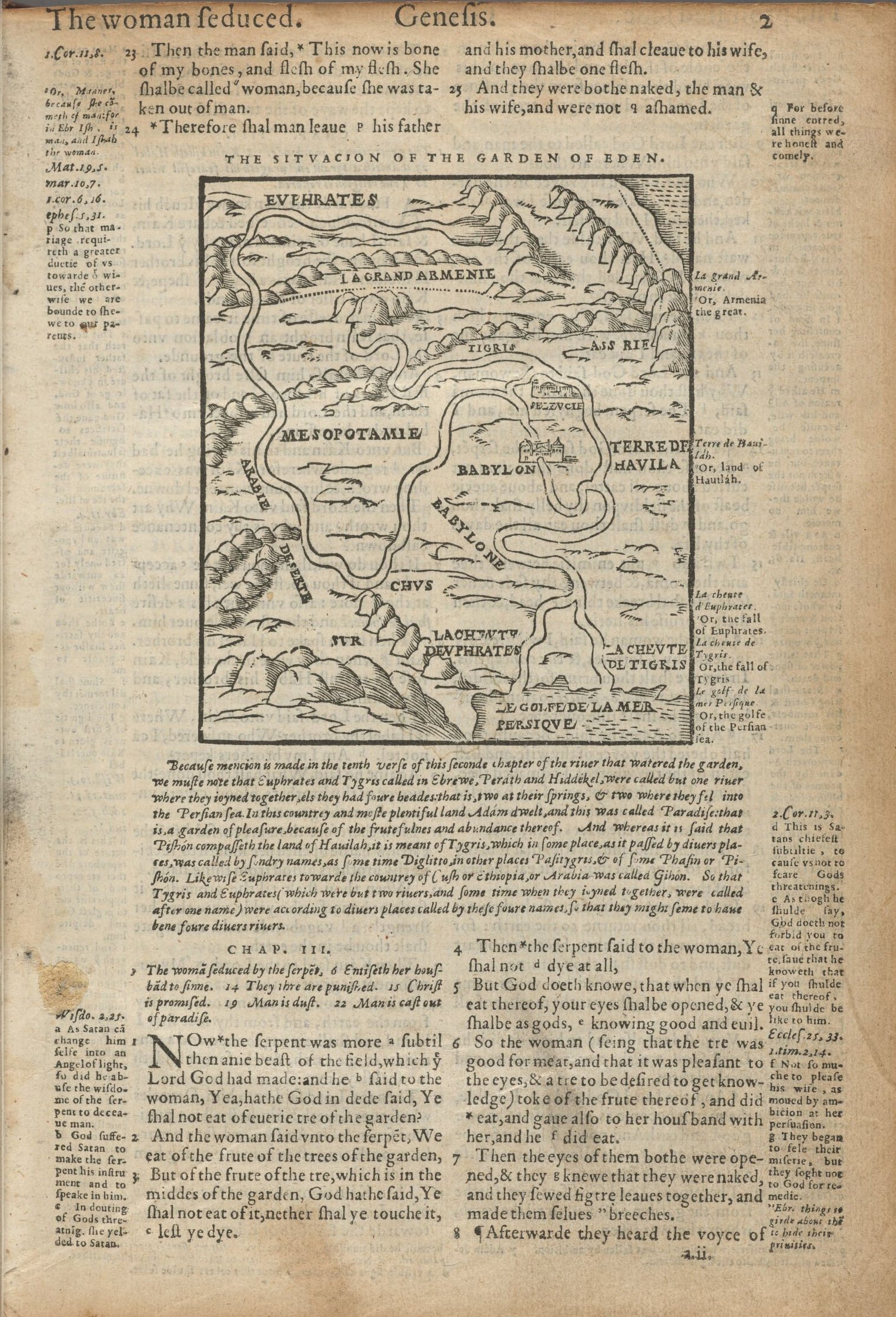
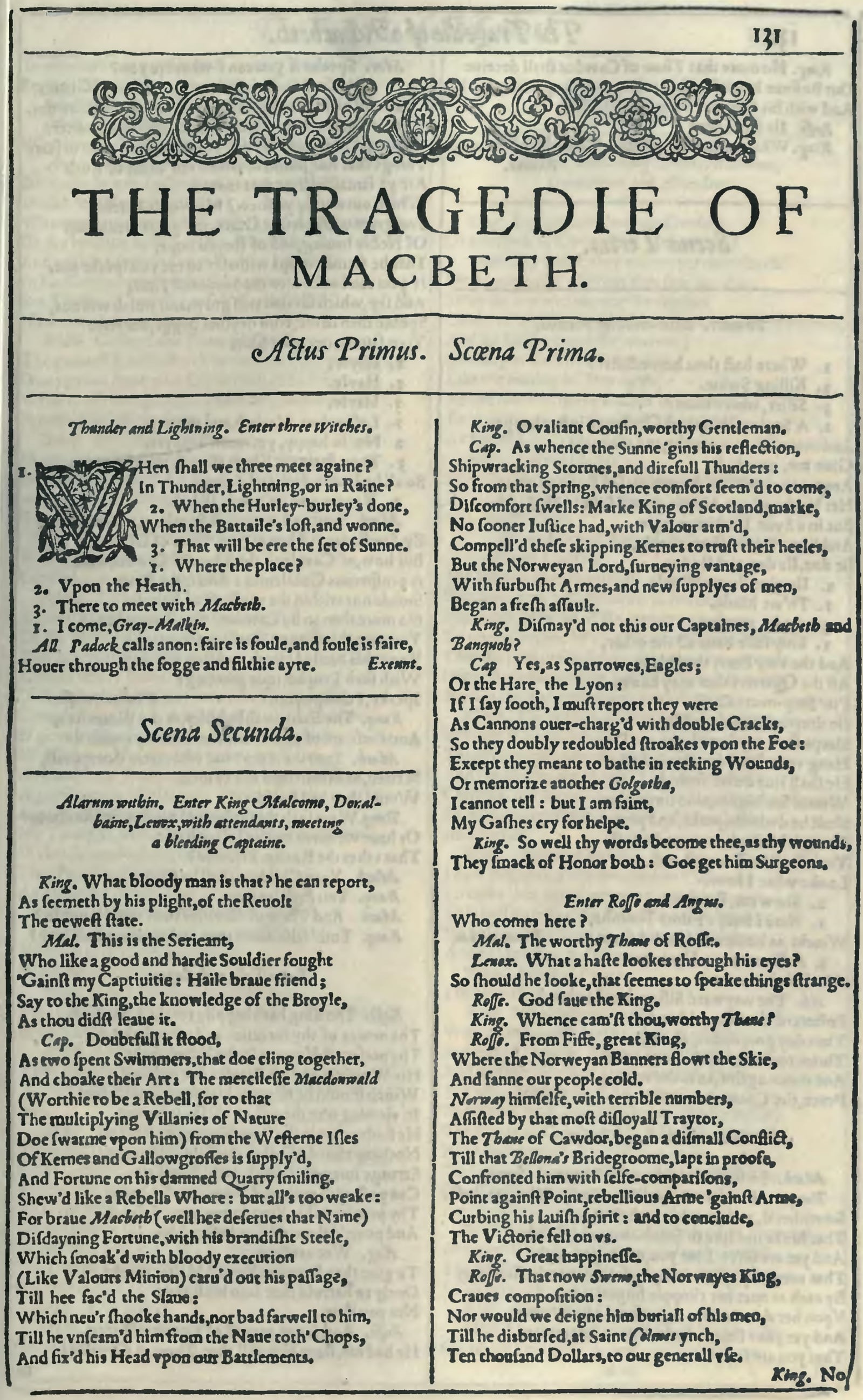
The Geneva Bible, 1560, with its marginal notes: Horatio’s margent. Houghton Library copy.Printed by Rowland Hall, Geneva; scan by the Houghton Library, 1560. Wikimedia Commons. Public domain.The first page of Macbeth in the First Folio, 1623.Isaac Jaggard and Edward Blount, printers, 1623. Wikimedia Commons. CC BY-SA 4.0.
Strongthe Bible habit, for Protestant reading habitsStrongthe Porter, against a Jesuit-sympathising author, though compatible with a lay Catholic horrified by the PlotSolidthe Valladolid cut, as a factNeutralthe Valladolid cut, as evidence about the author↓ against recusancy
The Catholic case has been carried mainly by converts and Catholic media, from Richard Simpson in 1854 through Pearce and Asquith. Its sharpest critics have been Catholics: Thurston in 1912, Miola in 2008, Cox in 2009, McCoog in 2011.
The coded-plays version is unfalsifiable: any objection is treated as ignorance of the code, which is the same vulnerability that sinks the authorship conspiracies. Kastan’s agnosticism is not a secular reflex; he notes a heterodox Shakespeare would be more useful to modern readers than a conforming one, and still concludes we cannot know.
The honest shape of the devil’s advocate case: a family with Catholic connections that conformed in every recorded public act; a father ruined by trade, not by faith; a daughter who slipped once and lived a Protestant life; a London career spent among Huguenots and players; a formulaic will; a late unsourced sentence; and a body of work that reads its Bible in Protestant English and mocks a Jesuit when the court expects it. Or, as Kastan guesses when pressed, a conforming parishioner, Protestant in name like most of his countrymen.