John Shakespeare
Glover and wool dealer. Bailiff 1568. Died 1601.
Ale-taster 1556, constable 1558, chamberlain 1561, alderman 1565, bailiff and justice from 1 October 1568, chief alderman 1571. As chamberlain he recorded 2s for “defasyng ymages in ye chapell” (1563/64) and 2s for “takynge doune ye rood loft” (1564/65). Exchequer prosecutions for usury and illegal wool dealing from 1569 to about 1583. Stopped attending the council from 1577; removed as alderman 6 September 1586 because he “dothe not Come to the halles when they be warned”. Named in the 1592 certificate among nine who “come not to church for fear of process for debt”. Granted arms 1596, exemplified 1599. Nothing records him refusing anything, and nothing records him swearing the Oath of Supremacy the law required of a bailiff; that gap is real.
Mary Arden
Youngest of eight daughters. Married about 1557. Buried 9 September 1608.
Robert Arden’s will of 24 November 1556 left her “all my lande at Willmecote cawlide Ashbyes” and named her co-executor. She bore eight children, signed with a mark (a horse seal in 1579), and left no record beyond deeds and her burial. The “conspicuously Catholic” reputation attaches to Park Hall; the link to Wilmcote runs through a 1501 Snitterfield deed and a claim of second-cousinage, and the College of Arms struck out the Park Hall coat in 1599.
Joan Shakespeare Hart
Baptised 15 April 1569. Buried 4 November 1646.
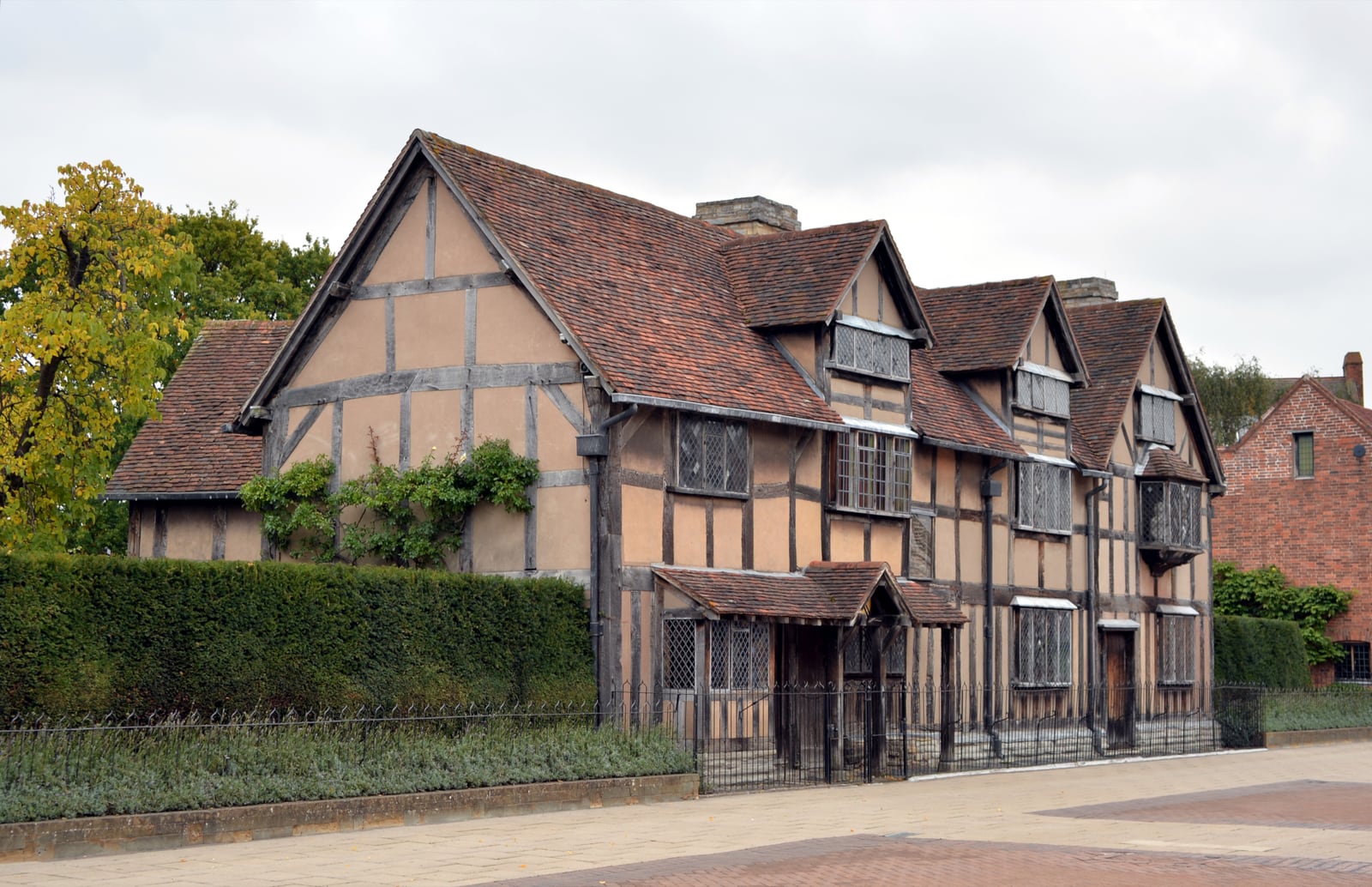
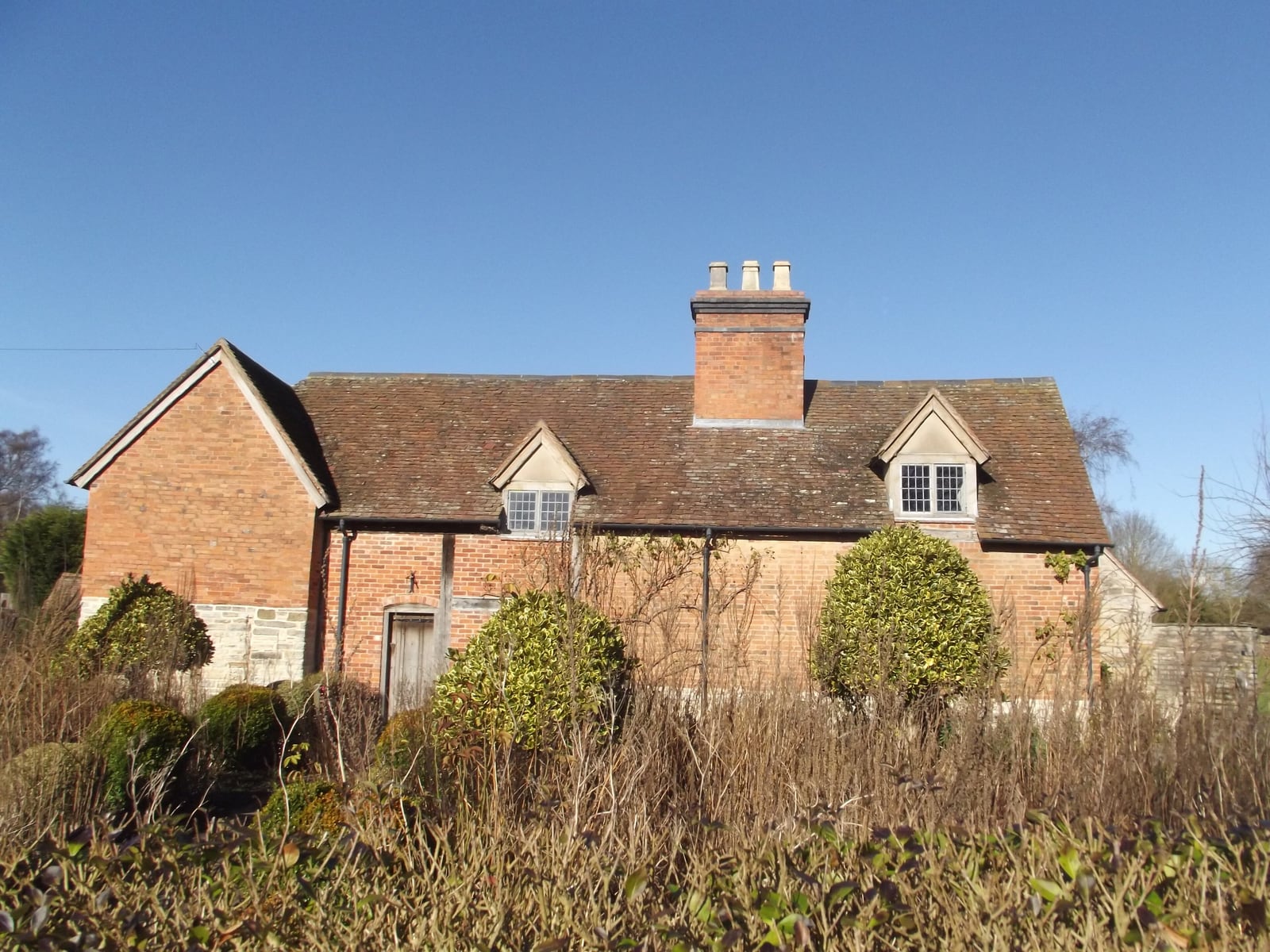
Married William Hart, hatter, about 1599; he was buried 17 April 1616, a week before her brother. William’s will gave her £20, his clothes and the right to live in the Henley Street property. She lived as a widow in the western cottage from 1616 to 1646, which is where the Testament was found in the roof. Her public record is Church of England throughout. Steggle’s 2024 article makes her the likeliest testator. Only seven surviving documents from her lifetime name her.
Susanna Hall
Baptised 26 May 1583. Died 11 July 1649.
Cited 5 May 1606 for not receiving Easter communion, with about twenty others; “dismissa”. Married the physician John Hall on 5 June 1607. The Halls won a slander suit against John Lane at Worcester in 1613. Licensed a seat in Holy Trinity “for hearinge divine service and Sermons” in 1633. Her epitaph: “Witty above her sexe, but that’s not all, Wise to salvation was good Mistris Hall.” Bearman calls Hall “Protestant, though not Puritan, in his later career”; the Birthplace Trust says Susanna “appeared to have Roman Catholic sympathies”. Her 1606 motive is unknown.
Judith Quiney
Baptised 2 February 1585. Died 1662.
Twin of Hamnet. Married Thomas Quiney, vintner, on 10 February 1616, in Lent, without the licence the season was thought to need; the couple were summoned to the Worcester court, and Quiney was excommunicated for not answering. On 26 March 1616 Quiney admitted “carnal copulation” with Margaret Wheeler, buried with her child eleven days earlier. Shakespeare had re-signed his will the day before, with changes protecting Judith’s portion. Probably illiterate; she signed a 1611 deed with a mark. Nothing in the record touches her religion.
Hamnet Shakespeare
Baptised 2 February 1585. Buried 11 August 1596, aged 11.
The register reads “August 11 Hamnet filius William Shakspere”. Cause of death unknown. Whether his father attended is unknown; the company may have been touring Kent. The reading that a father who buried a son in 1596 and a father in 1601 wrote a play about a dead father who asks to be remembered is a legitimate dramatic premise and not a documented fact; most scholars reject it as biography.
Hamnet and Judith Sadler
Stratford baker and his wife. Godparents to the twins, almost certainly.
Both cited for non-reception of communion in 1606, in the same sweep as Susanna. Sadler witnessed a 1598 conveyance and the 1616 will, and received a ring bequest interlined over the struck-out Richard Tyler. The primary 1606 list was not seen for this file; the citation is widely reported.
William Reynolds
Stratford landowner. Ring legatee, 1616.
Jailed in Warwick for recusancy in autumn 1613; a letter of 2 October 1613 reports William Slaughter securing his release on bail. His parents appear on recusancy lists. Pearce’s suggestion that Shakespeare bailed him out “cannot be proved”, as Pearce himself says. The 1613 imprisonment is cited at second hand and is checkable.
Richard Davies, the witness
Anglican clergyman. Rector of Sapperton from 1695; Archdeacon of Coventry. Died 1707 or 1708.
Inherited William Fulman’s biographical collections at Fulman’s death in 1688 and filled Fulman’s blank Shakespeare entry around 1690. The note holds the deer-poaching story, the “Justice Clodpate” and “three louses rampant” jokes, the death date, the gravestone curse, and the closing clause. A “c. 1660” date that circulates cannot be right. His source is unknown.
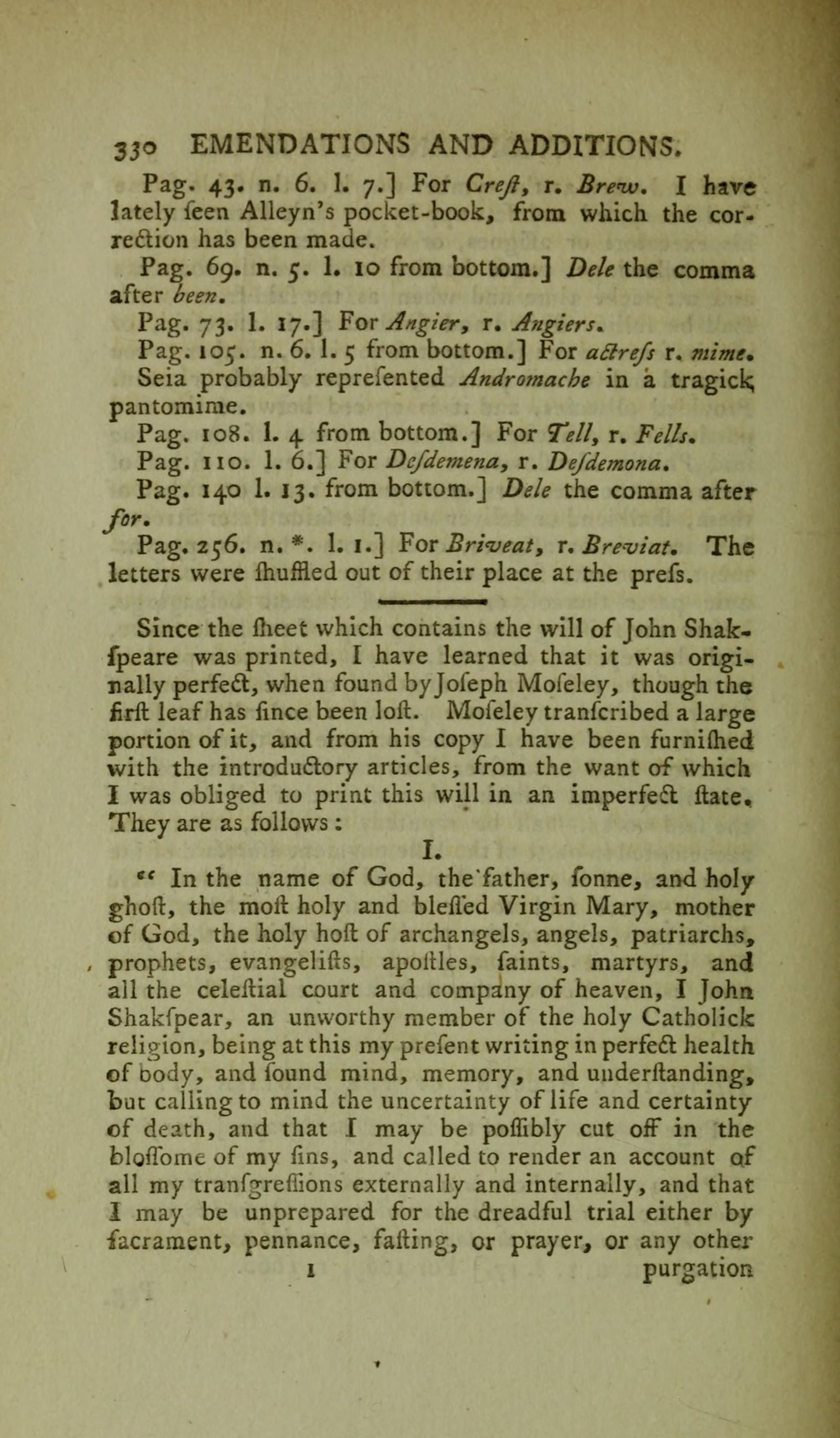
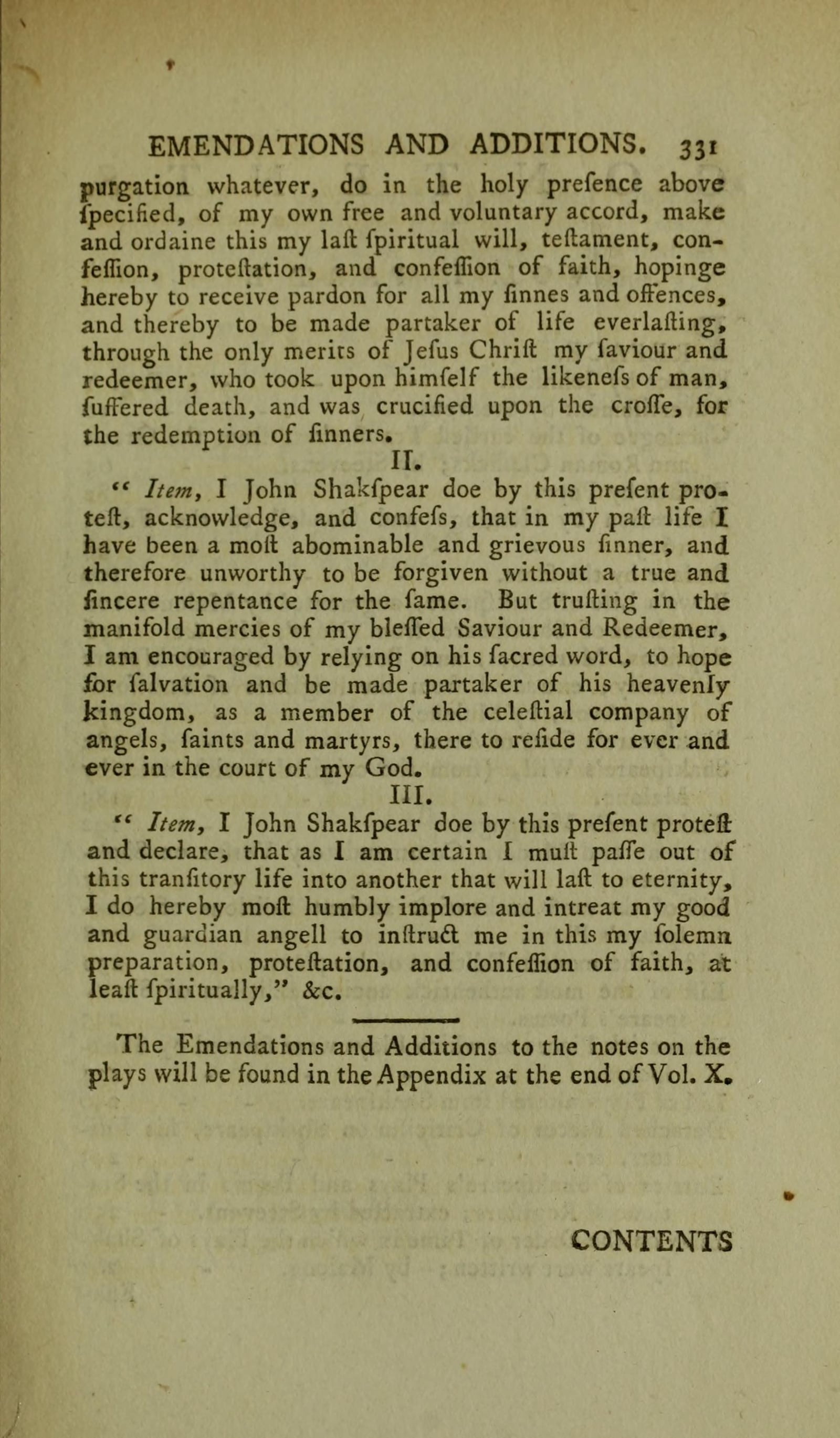
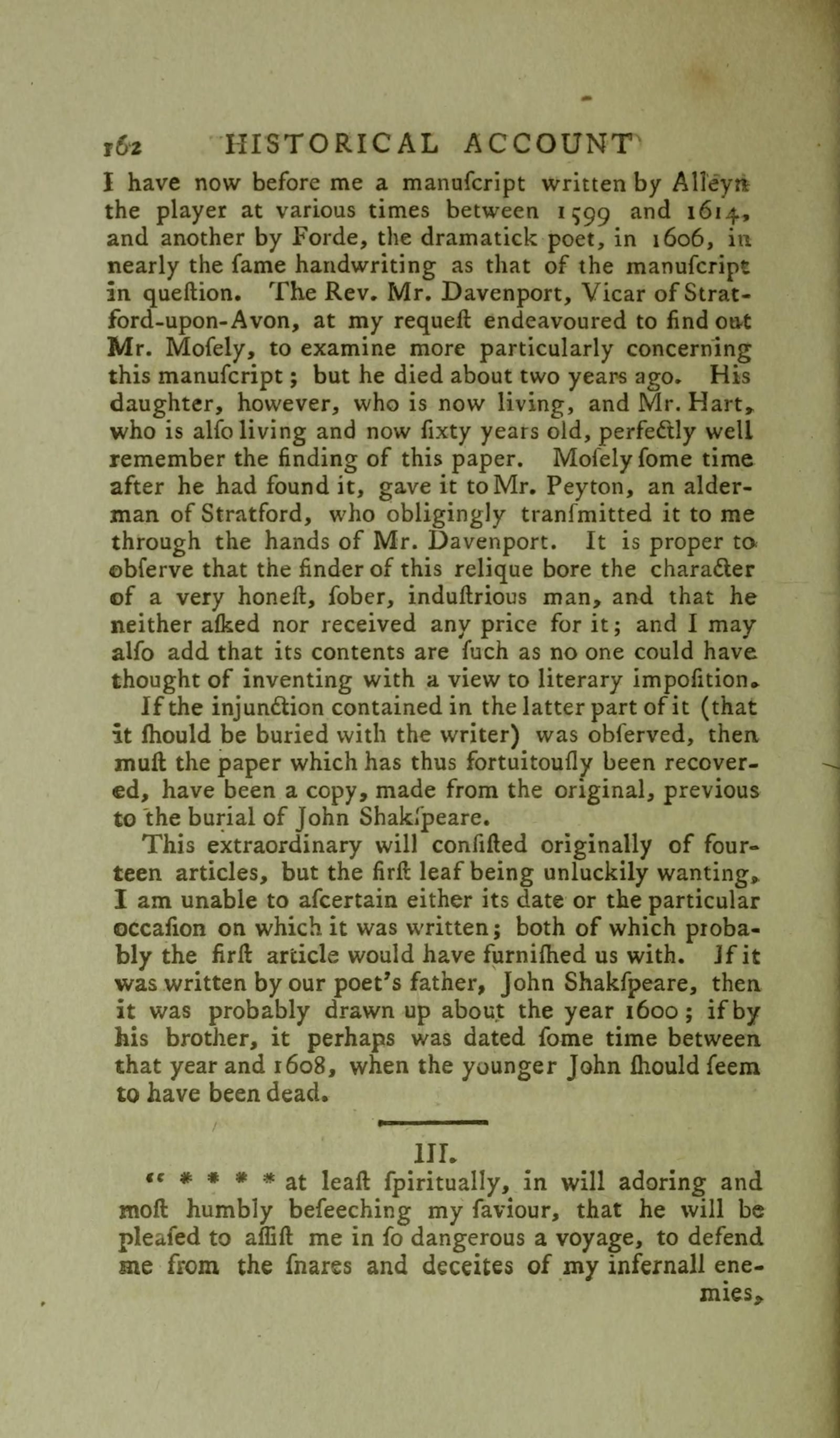
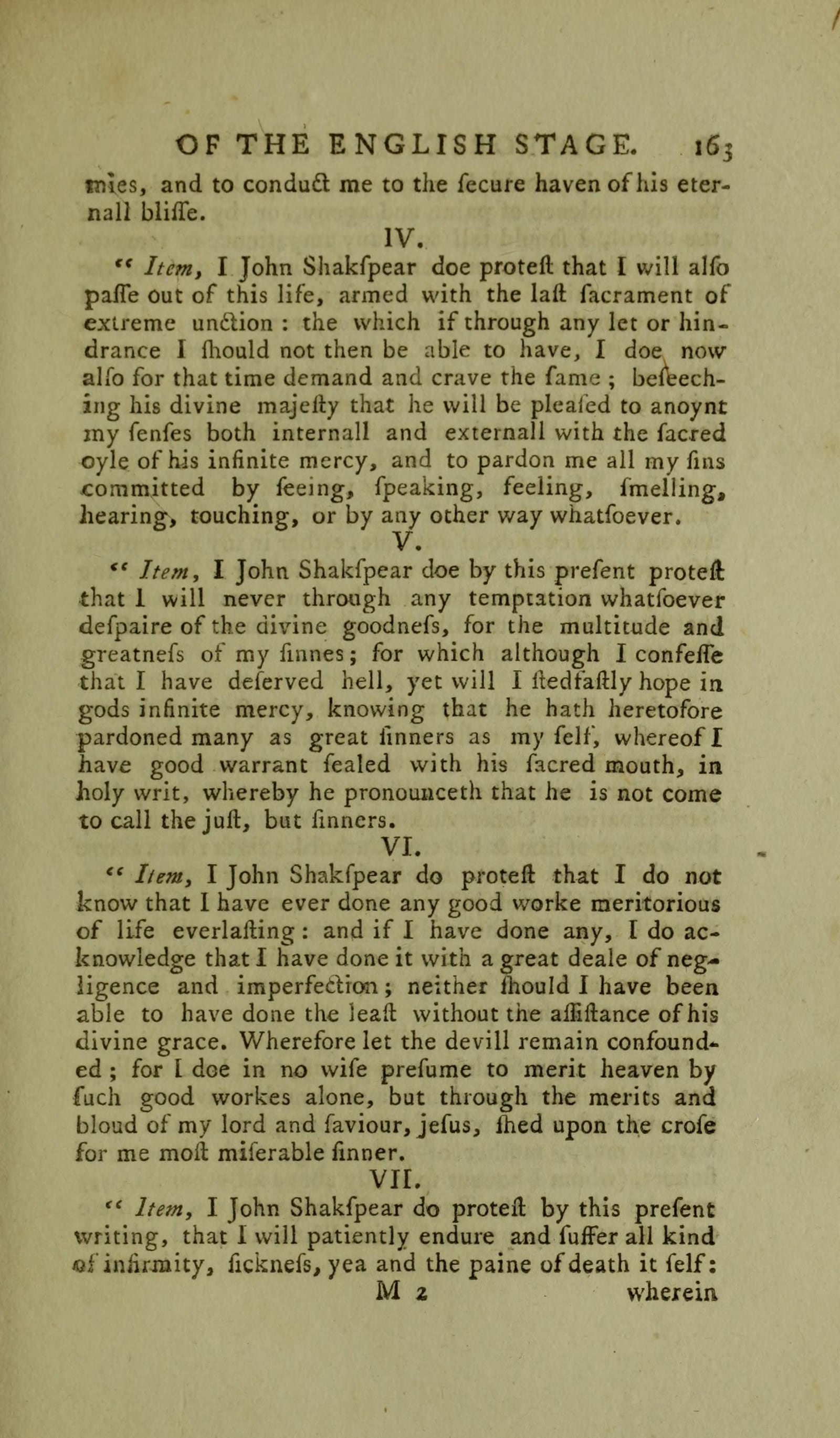
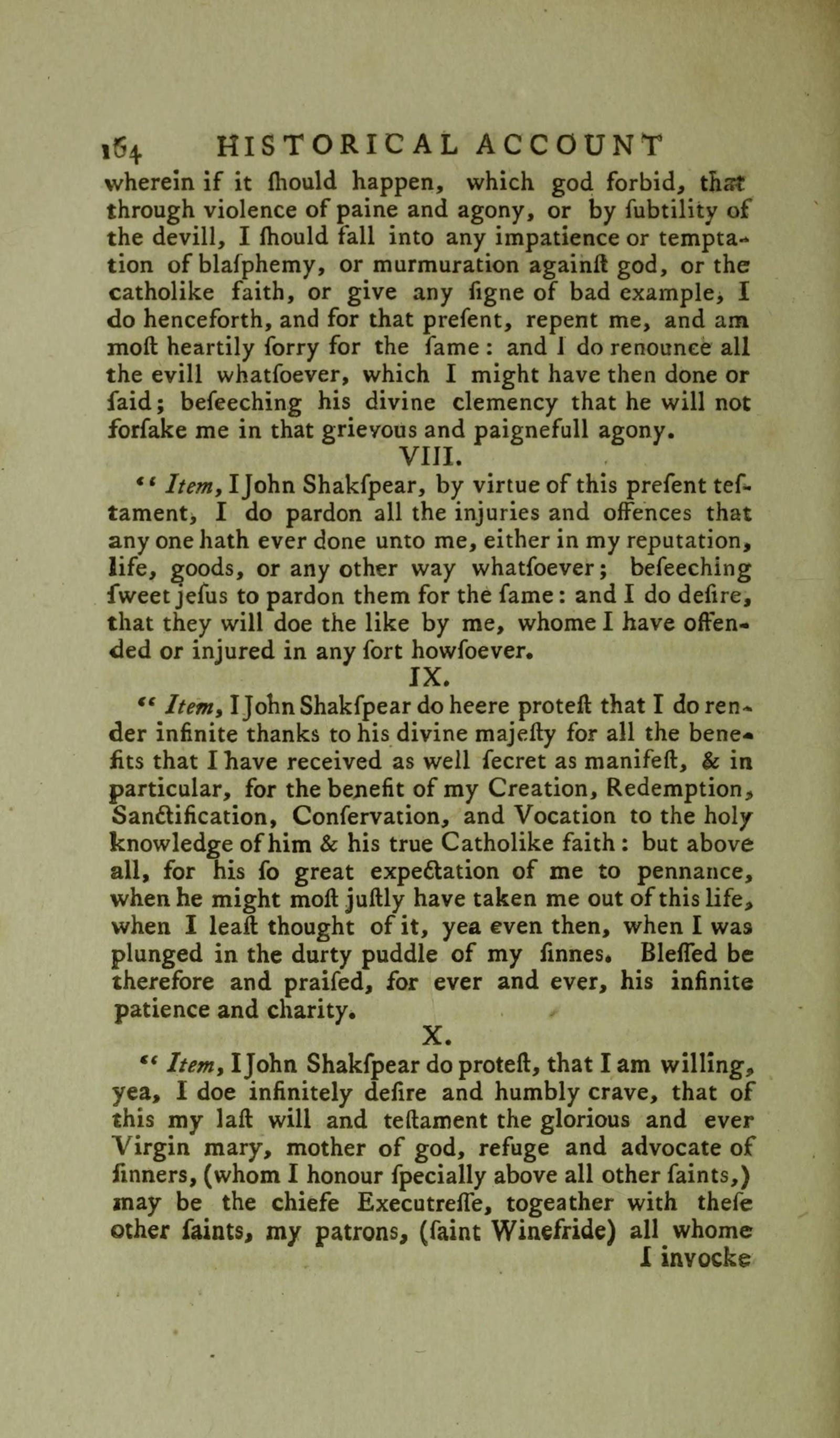
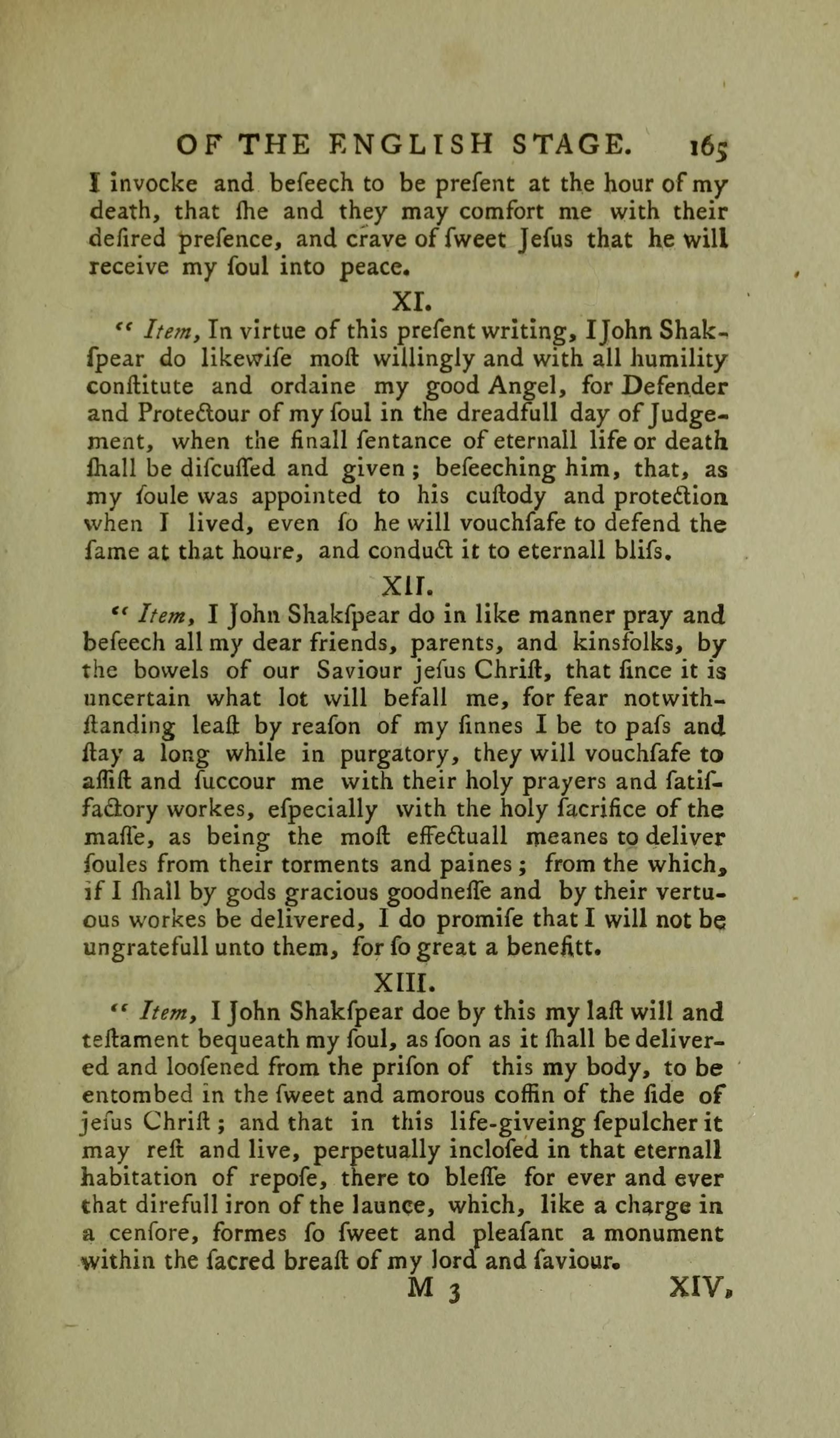
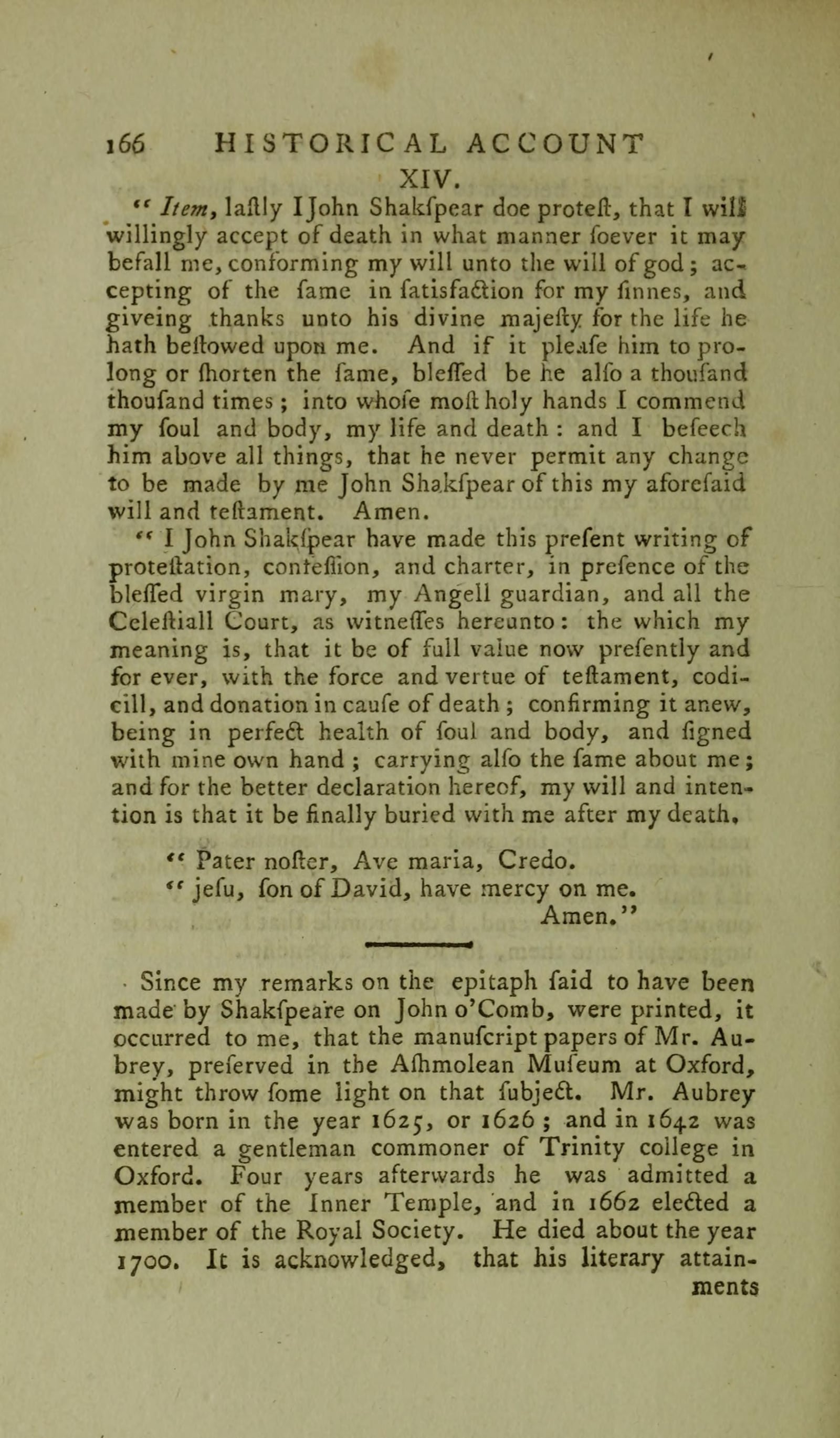
Malone printed the body (Article III from mid-sentence through XIV and the close) at pages 162 to 166 of his 1790 edition, from the five leaves he held. He printed Articles I, II and the opening of III at pages 330 and 331, from a copy John Jordan supplied. Malone described the leaves he held: “The five leaves which were sent to me were very small, tacked together by a thread, the size the eighth part of a sheet.” The spelling below is Malone’s; long s is normalised.
Supplied by John Jordan in 1790; Malone never saw this leafI.In the name of God, the father, sonne, and holy ghost, the most holy and blessed Virgin Mary, mother of God, the holy host of archangels, angels, patriarchs, prophets, evangelists, apostles, saints, martyrs, and all the celestial court and company of heaven, I John Shakspear, an unworthy member of the holy Catholick religion, being at this my present writing in perfect health of body, and sound mind, memory, and understanding, but calling to mind the uncertainty of life and certainty of death, and that I may be possibly cut off in the blossome of my sins, and called to render an account of all my transgressions externally and internally, and that I may be unprepared for the dreadful trial either by sacrament, pennance, fasting, or prayer, or any other purgation whatever, do in the holy presence above specified, of my own free and voluntary accord, make and ordaine this my last spiritual will, testament, confession, protestation, and confession of faith, hopinge hereby to receive pardon for all my sinnes and offences, and thereby to be made partaker of life everlasting, through the only merits of Jesus Christ my saviour and redeemer, who took upon himself the likeness of man, suffered death, and was crucified upon the crosse, for the redemption of sinners.
II.Item, I John Shakspear doe by this present protest, acknowledge, and confess, that in my past life I have been a most abominable and grievous sinner, and therefore unworthy to be forgiven without a true and sincere repentance for the same. But trusting in the manifold mercies of my blessed Saviour and Redeemer, I am encouraged by relying on his sacred word, to hope for salvation and be made partaker of his heavenly kingdom, as a member of the celestial company of angels, saints and martyrs, there to reside for ever and ever in the court of my God.
III.Item, I John Shakspear doe by this present protest and declare, that as I am certain I must passe out of this transitory life into another that will last to eternity, I do hereby most humbly implore and intreat my good and guardian angell to instruct me in this my solemn preparation, protestation, and confession of faith, at least spiritually,
The join. Jordan’s copy ends at “at least spiritually”. The leaves Malone held begin at the same words. Everything above this line rests on Jordan alone.
The five leaves Malone heldIII. (continued)* * * * at least spiritually, in will adoring and most humbly beseeching my saviour, that he will be pleased to assist me in so dangerous a voyage, to defend me from the snares and deceites of my infernall enemies, and to conduct me to the secure haven of his eternall blisse.
IV.Item, I John Shakspear doe protest that I will also passe out of this life, armed with the last sacrament of extreme unction: the which if through any let or hindrance I should not then be able to have, I doe now also for that time demand and crave the same; beseeching his divine majesty that he will be pleased to anoynt my senses both internall and externall with the sacred oyle of his infinite mercy, and to pardon me all my sins committed by seeing, speaking, feeling, smelling, hearing, touching, or by any other way whatsoever.
V.Item, I John Shakspear doe by this present protest that I will never through any temptation whatsoever despaire of the divine goodness, for the multitude and greatness of my sinnes; for which although I confesse that I have deserved hell, yet will I stedfastly hope in gods infinite mercy, knowing that he hath heretofore pardoned many as great sinners as my self, whereof I have good warrant sealed with his sacred mouth, in holy writ, whereby he pronounceth that he is not come to call the just, but sinners.
VI.Item, I John Shakspear do protest that I do not know that I have ever done any good worke meritorious of life everlasting: and if I have done any, I do acknowledge that I have done it with a great deale of negligence and imperfection; neither should I have been able to have done the least without the assistance of his divine grace. Wherefore let the devill remain confounded; for I doe in no wise presume to merit heaven by such good workes alone, but through the merits and bloud of my lord and saviour, jesus, shed upon the crose for me most miserable sinner.
VII.Item, I John Shakspear do protest by this present writing, that I will patiently endure and suffer all kind of infirmity, sickness, yea and the paine of death it self: wherein if it should happen, which god forbid, that through violence of paine and agony, or by subtility of the devill, I should fall into any impatience or temptation of blasphemy, or murmuration against god, or the catholike faith, or give any signe of bad example, I do henceforth, and for that present, repent me, and am most heartily sorry for the same: and I do renounce all the evill whatsoever, which I might have then done or said; beseeching his divine clemency that he will not forsake me in that grievous and paignefull agony.
VIII.Item, I John Shakspear, by virtue of this present testament, I do pardon all the injuries and offences that any one hath ever done unto me, either in my reputation, life, goods, or any other way whatsoever; beseeching sweet jesus to pardon them for the same: and I do desire, that they will doe the like by me, whome I have offended or injured in any sort howsoever.
IX.Item, I John Shakspear do heere protest that I do render infinite thanks to his divine majesty for all the benefits that I have received as well secret as manifest, & in particular, for the benefit of my Creation, Redemption, Sanctification, Conservation, and Vocation to the holy knowledge of him & his true Catholike faith: but above all, for his so great expectation of me to pennance, when he might most justly have taken me out of this life, when I least thought of it, yea even then, when I was plunged in the durty puddle of my sinnes. Blessed be therefore and praised, for ever and ever, his infinite patience and charity.
X.Item, I John Shakspear do protest, that I am willing, yea, I doe infinitely desire and humbly crave, that of this my last will and testament the glorious and ever Virgin mary, mother of god, refuge and advocate of sinners, (whom I honour specially above all other saints,) may be the chiefe Executresse, togeather with these other saints, my patrons, (saint Winefride) all whome I invocke and beseech to be present at the hour of my death, that she and they may comfort me with their desired presence, and crave of sweet Jesus that he will receive my soul into peace.
XI.Item, In virtue of this present writing, I John Shakspear do likewise most willingly and with all humility constitute and ordaine my good Angel, for Defender and Protectour of my soul in the dreadfull day of Judgement, when the finall sentance of eternall life or death shall be discussed and given; beseeching him, that, as my soule was appointed to his custody and protection when I lived, even so he will vouchsafe to defend the same at that houre, and conduct it to eternall bliss.
XII.Item, I John Shakspear do in like manner pray and beseech all my dear friends, parents, and kinsfolks, by the bowels of our Saviour jesus Christ, that since it is uncertain what lot will befall me, for fear notwithstanding least by reason of my sinnes I be to pass and stay a long while in purgatory, they will vouchsafe to assist and succour me with their holy prayers and satisfactory workes, especially with the holy sacrifice of the masse, as being the most effectuall meanes to deliver soules from their torments and paines; from the which, if I shall by gods gracious goodnesse and by their vertuous workes be delivered, I do promise that I will not be ungratefull unto them, for so great a benefitt.
XIII.Item, I John Shakspear doe by this my last will and testament bequeath my soul, as soon as it shall be delivered and loosened from the prison of this my body, to be entombed in the sweet and amorous coffin of the side of jesus Christ; and that in this life-giveing sepulcher it may rest and live, perpetually inclosed in that eternall habitation of repose, there to blesse for ever and ever that direfull iron of the launce, which, like a charge in a censore, formes so sweet and pleasant a monument within the sacred breast of my lord and saviour.
XIV.Item, lastly I John Shakspear doe protest, that I will willingly accept of death in what manner soever it may befall me, conforming my will unto the will of god; accepting of the same in satisfaction for my sinnes, and giveing thanks unto his divine majesty for the life he hath bestowed upon me. And if it please him to prolong or shorten the same, blessed be he also a thousand thousand times; into whose most holy hands I commend my soul and body, my life and death: and I beseech him above all things, that he never permit any change to be made by me John Shakspear of this my aforesaid will and testament. Amen.
I John Shakspear have made this present writing of protestation, confession, and charter, in presence of the blessed virgin mary, my Angell guardian, and all the Celestiall Court, as witnesses hereunto: the which my meaning is, that it be of full value now presently and for ever, with the force and vertue of testament, codicill, and donation in cause of death; confirming it anew, being in perfect health of soul and body, and signed with mine own hand; carrying also the same about me; and for the better declaration hereof, my will and intention is that it be finally buried with me after my death.
Pater noster, Ave maria, Credo.
Jesu, son of David, have mercy on me.
Amen.
Drawn up at Warwick on 25 September 1592 by the Warwickshire commissioners, answering Privy Council letters of 13 August 1592. The National Archives, SP 12/243/76. The Stratford entries, as transcribed in English Historical Documents from Fripp.
Written by Richard Davies into William Fulman’s blank Shakespeare entry, Corpus Christi College, Oxford, after 1688. Wording as quoted in the sources reached; the shelfmark and exact spelling were not checked against the manuscript for this file.