The World
The regime was financial first and bloody second. The gallows were for priests and for the laypeople who hid them.
The law ladder
- 1559
The Act of Uniformity required every inhabitant to “resort to their parish church or chapel accustomed” on Sundays and holy days. Fine: twelve pence per absence, levied by the churchwardens for the poor. The Act of Supremacy required the oath of office-holders.
- 1570
The bull Regnans in Excelsis called Elizabeth “the pretended Queen of England and the servant of crime” and released her subjects from allegiance.
- 1571
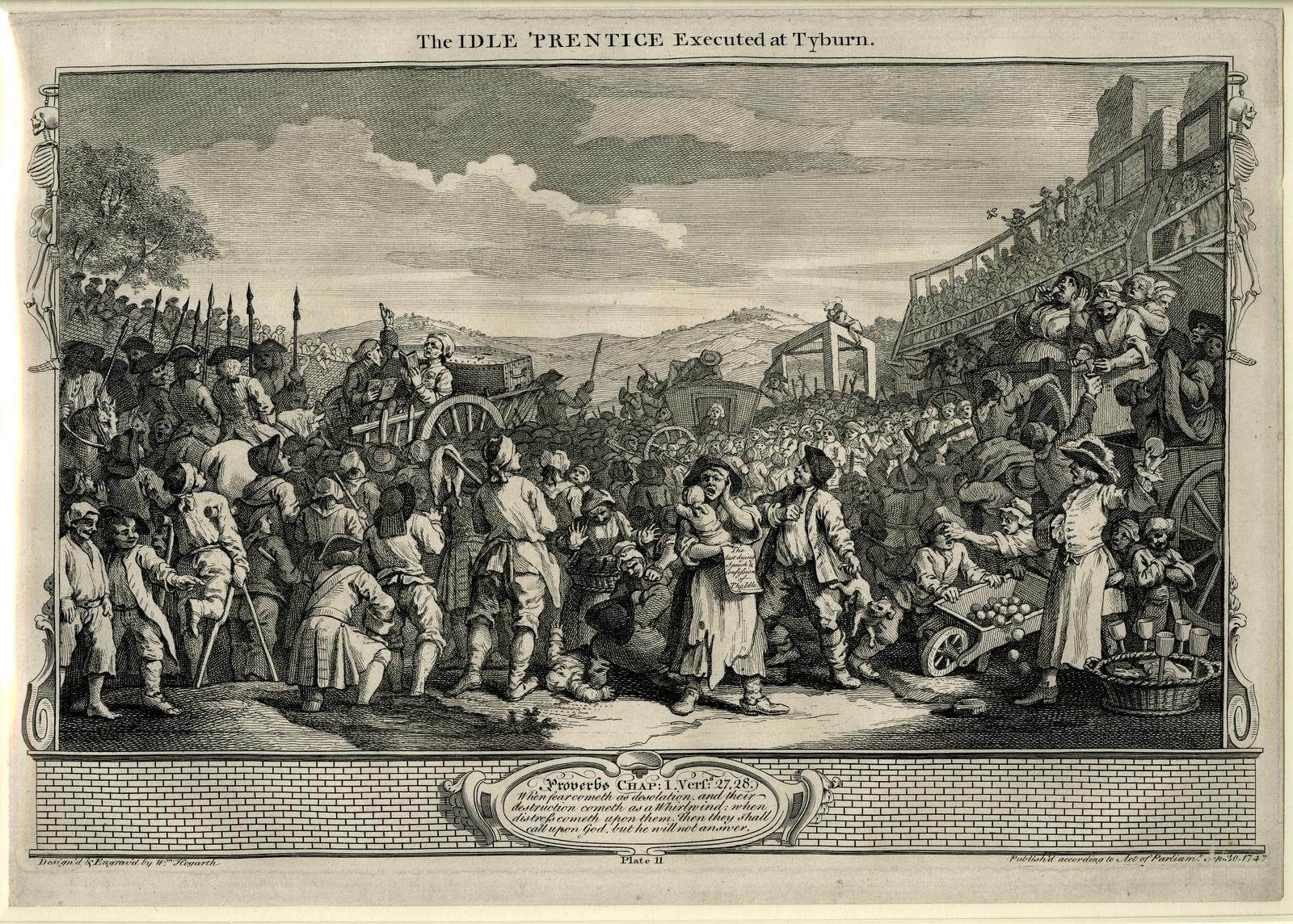
Treason to bring in papal bulls or to reconcile anyone to Rome. Tyburn’s permanent “Triple Tree” went up the same year; its first victim was the Catholic John Story, 1 June 1571.
- 1581
The fine for absence from church rose to £20 a lunar month, £260 a year, more than the whole income of most gentry. Saying Mass: 200 marks and a year in prison. Hearing it: 100 marks and a year. Keeping a non-conforming schoolmaster: £10 a month.
- 1585
Any priest ordained abroad who stayed in England was a traitor. Anyone who sheltered him was a felon “without benefit of clergy”, to “suffer death”. Sending a child abroad without licence: £100. Most English martyrs were executed under this statute.
- 1587
Where the £20 a month went unpaid, the Exchequer could seize the recusant’s goods and two-thirds of his lands.
- 1593
Convicted recusants confined within five miles of home. Breach forfeited all goods and all lands for life.
- 1606
After the Plot: the Oath of Allegiance; fines of £20, £40 and £60 for missing annual communion; a ten-mile exclusion from London; £100 per child not baptised in the parish church; a bar on recusants practising law or medicine.
In practice the regime was selective, bribable and enforced in bursts after plots, which is why “church papists” who attended the parish church and kept the old faith at home vastly outnumbered convicted recusants. The numbers are contested between Bossy’s gentry sect and Haigh’s larger, continuous, under-counted survival. Bossy’s often-quoted figure of about 40,000 around 1603 was not confirmed in any source reached. About a fifth of the titular nobility and a twelfth of the upper gentry were Catholic. For a Stratford family the realistic exposures were the shilling fine and the churchwardens’ presentment, then from 1581 the £20 fine, from 1585 the harbouring felony, and after 1606 the communion test and the Oath.
Sources: Act of Uniformity, Hanover; Wikipedia, Regnans in Excelsis; Wikipedia, Religion Act 1580; Catholic Encyclopedia, Penal Laws; 1585 Act, Hanover; National Archives, Recusant Rolls; 1593 Act, Hanover; Wikipedia, Popish Recusants Act 1605; Wikipedia, Tyburn; Stone, NYRB 1977; Haigh 1978; Wikipedia, Elizabethan Religious Settlement.
The terror
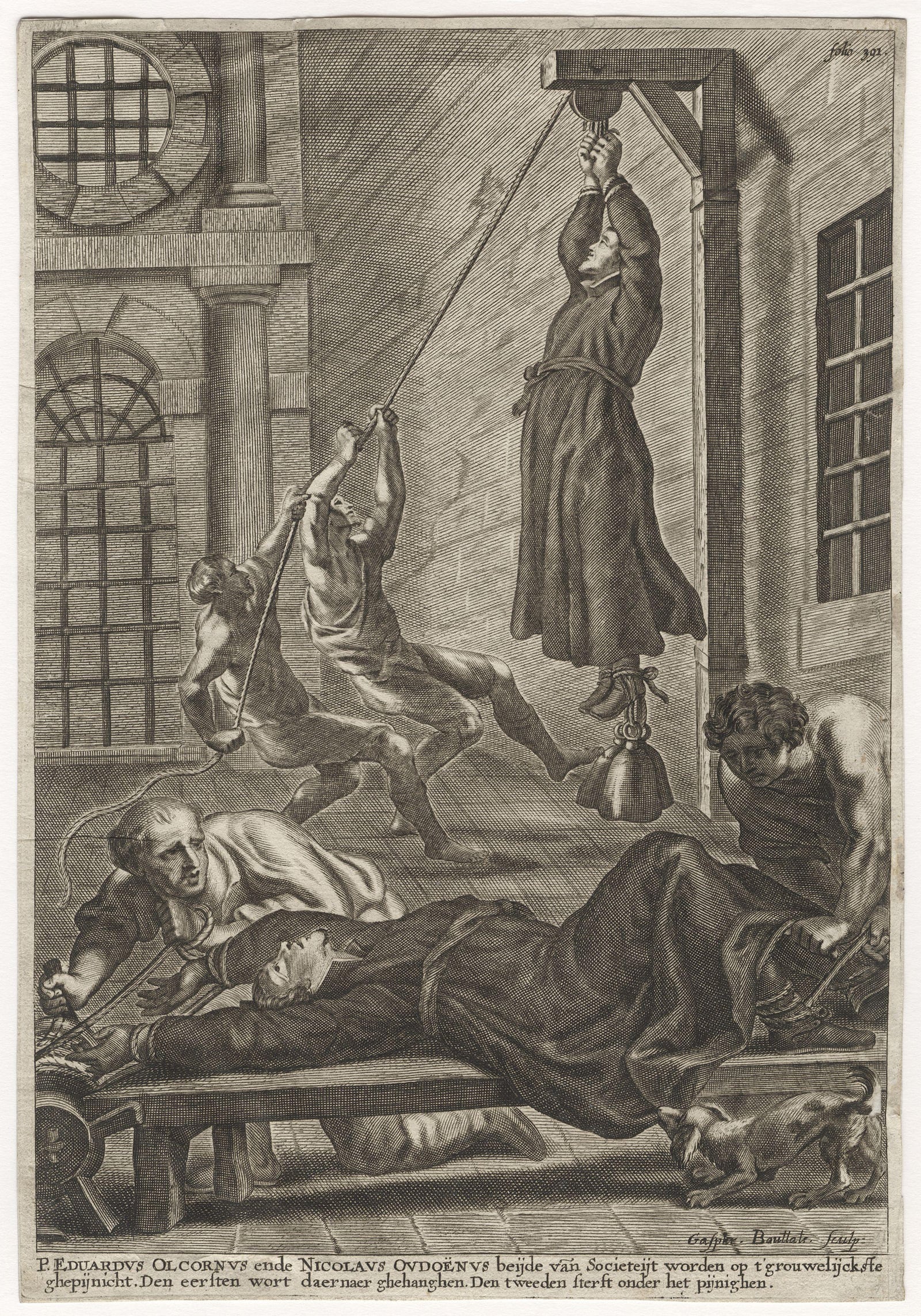
Richard Topcliffe (1531 to 1604) ran his own torture room next to the Gatehouse prison in Westminster from the late 1580s to 1595, hanging priests by the wrists in manacles. He wrote to the Queen as his “goddess” and boasted from the Marshalsea in 1595 that he had “helped more traitors” to Tyburn “than all the noblemen and gentlemen of the court”. He also interrogated Ben Jonson in 1597 over The Isle of Dogs.
Pursuivants were bounty hunters, informers and apostates. There are few recorded cases of searchers finding an occupied hide without an informant, and the searched household paid for the search. Anthony Munday, the lead author of Sir Thomas More, had entered the English College at Rome under a false name in 1578 and was rewarded in 1584 for “political services against the Catholics”.
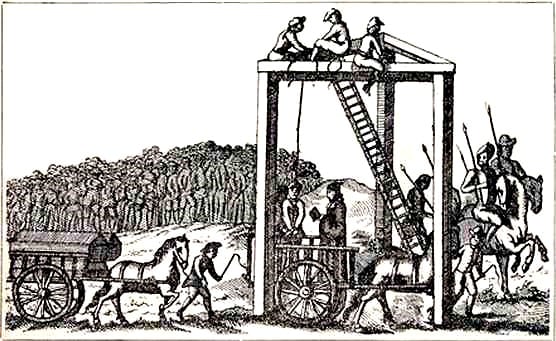
The procedure: dragged on a hurdle, hanged from a ladder, cut down alive, emasculated and disembowelled, the entrails burned, then beheaded and quartered, the remains parboiled with salt and cumin, the heads set on London Bridge. About 183 to 189 Catholics were executed under Elizabeth, most after 1581, and twenty-odd under James. The Tyburn Convent counts 105 Catholic martyrs at Tyburn.
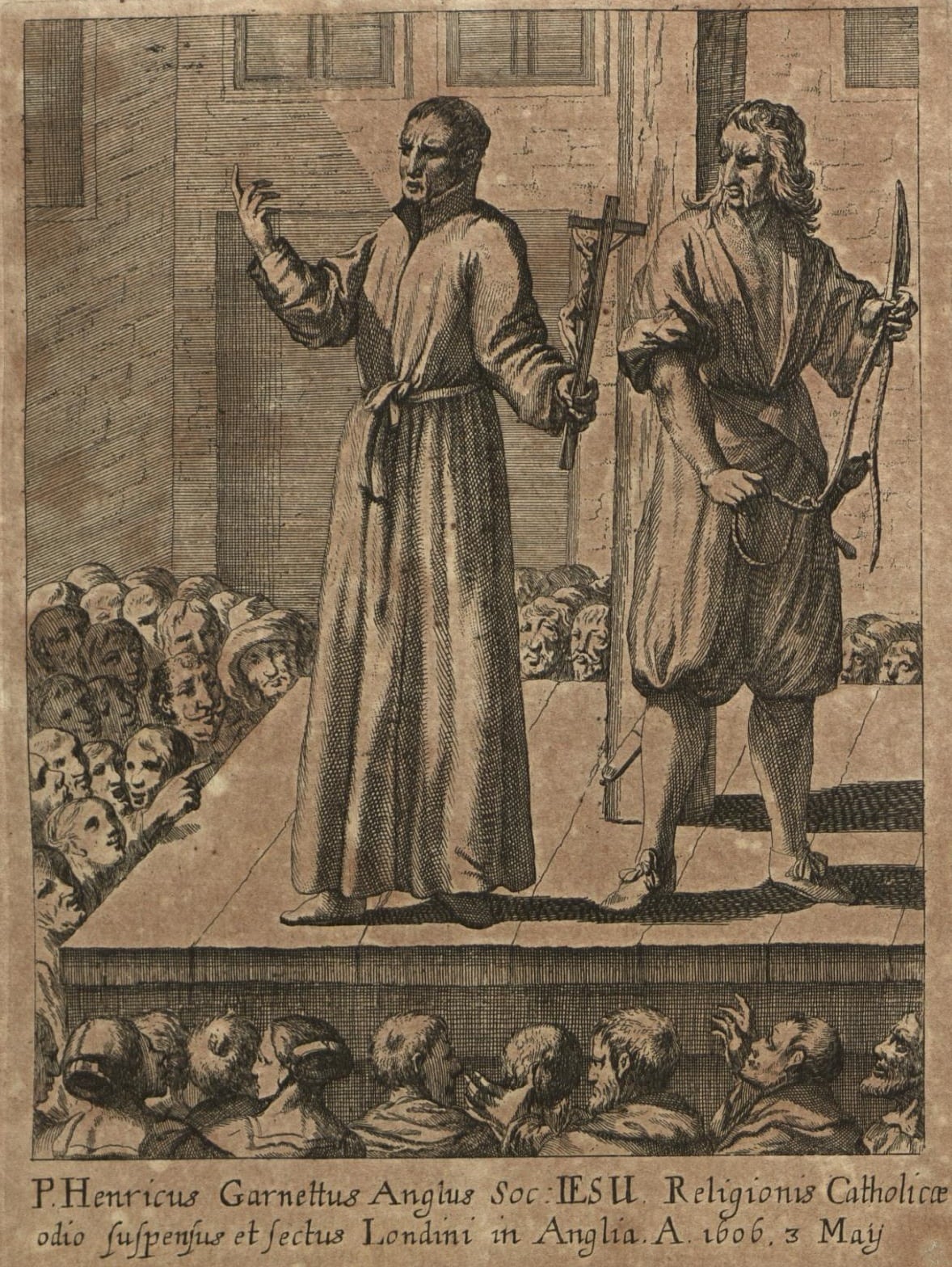
Crowd behaviour shifted. At Southwell’s execution in 1595 Lord Mountjoy pulled his legs and no one shouted “Traitor!” at the head. At Garnet’s in 1606 the crowd cried “hold, hold” so he was dead before the knife. Within fifteen miles of Stratford, the priest John Sugar and the layman Robert Grissold, arrested at Rowington in July 1603, were executed at Warwick on 16 July 1604.
Sources: Wikipedia, Topcliffe; Lyons, Topcliffe; Wikipedia, Priest hunter; Wikipedia, Munday; Wikipedia, Hanged, drawn and quartered; Britannica, English Martyrs; Wikipedia, Southwell; Gunpowder Plot Society, Garnet; Wikipedia, John Sugar.
The mission
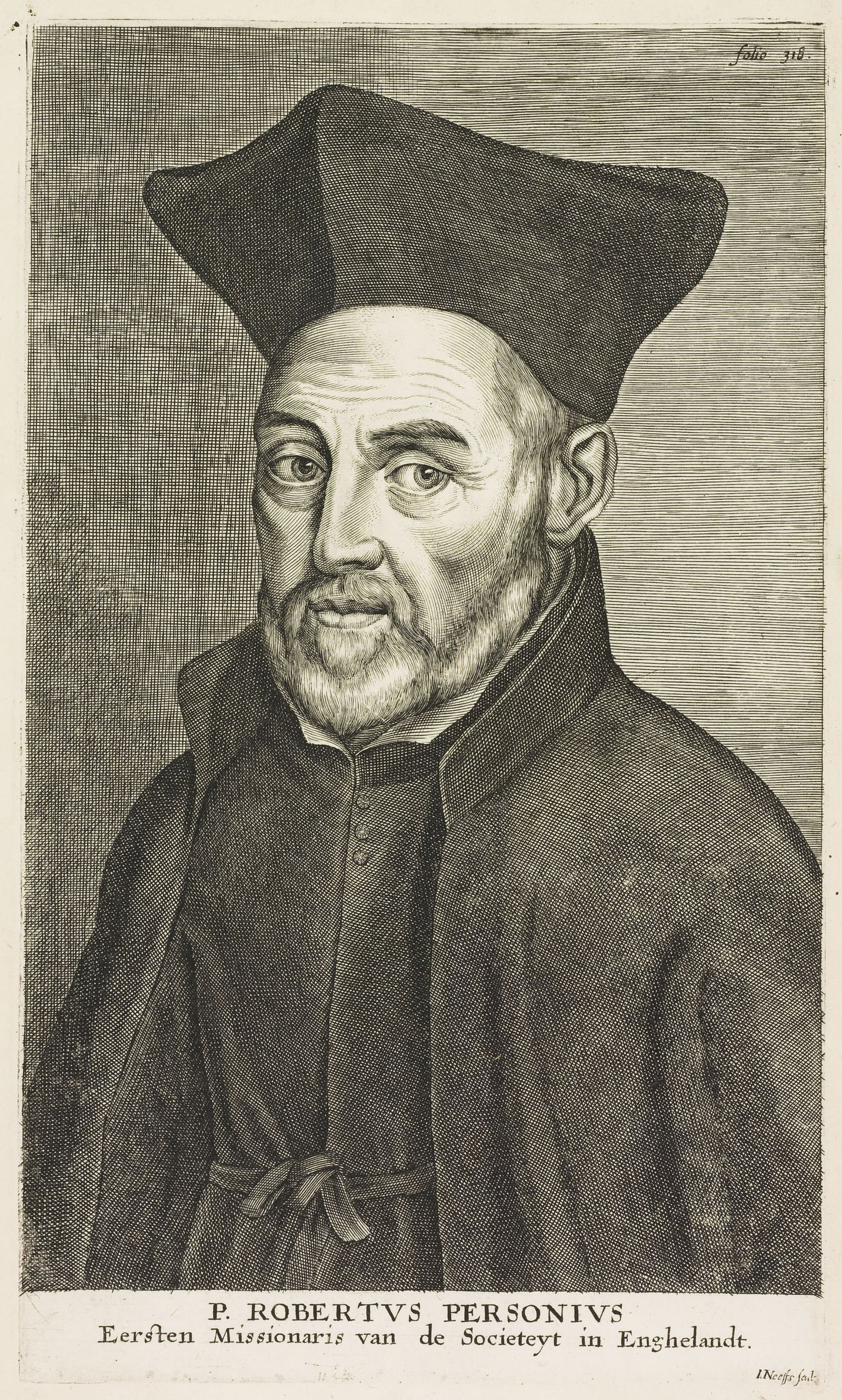
William Allen leased a house at Douai on Michaelmas Day 1568 with six students. The college sent over 300 priests into England by 1600, of whom more than 130 were executed. Rome followed in 1579, Valladolid in 1589, Seville in 1592, Saint-Omer in 1593 or 1594.
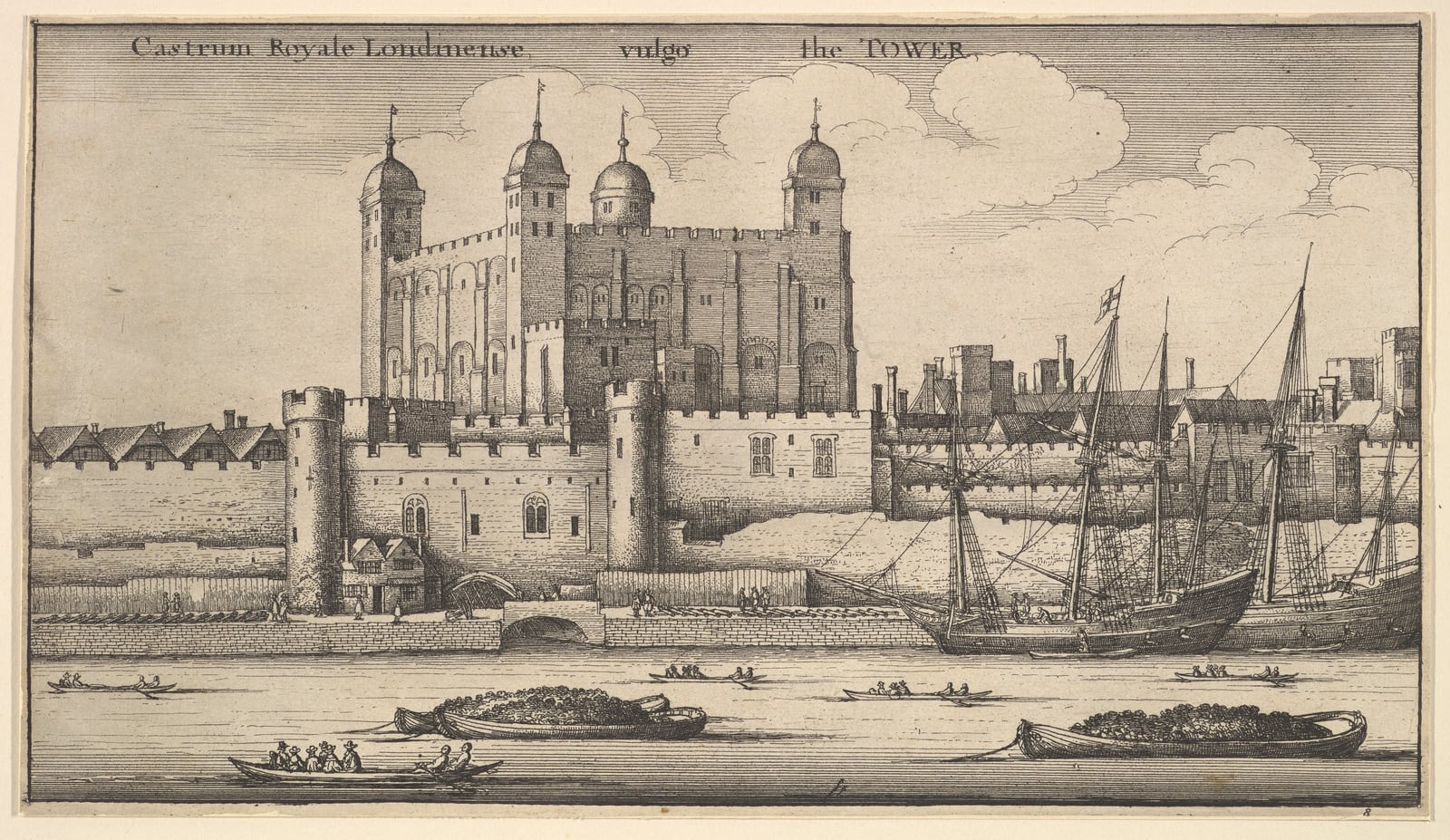
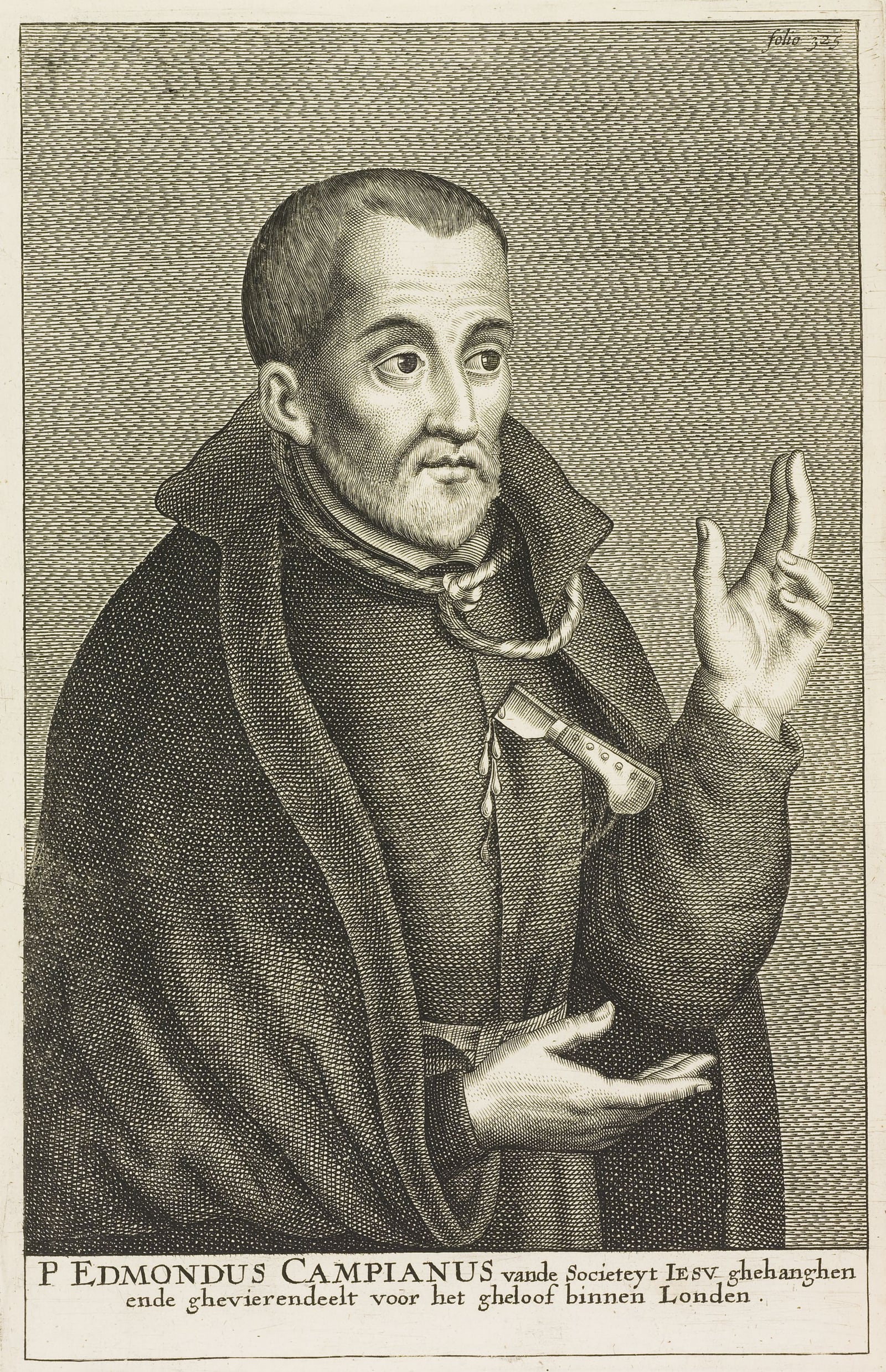
Campion landed at Dover on 24 June 1580 disguised as a jewel merchant. He wrote his “Brag” to be found if captured: “The expense is reckoned, the enterprise is begun; it is of God; it cannot be withstood.” He printed Decem Rationes on a secret press in the attics of Stonor and had 400 copies left in the pews of St Mary’s, Oxford. He was betrayed at Lyford Grange on 17 July 1581 when searchers saw light between two planks, racked, disputed four times standing in the Tower chapel, and hanged, drawn and quartered at Tyburn on 1 December 1581.
John Gerard’s Autobiography is the best firsthand account of the tradecraft: landing in the dark on the Norfolk coast in November 1588, posing as a gentleman sportsman fluent in falconry, writing in orange juice because the writing stays visible once heated, so a reader could tell if a letter had been opened, never using true names, hiding “between walls, under gables, or beneath fireplaces”, hung by the wrists in the Tower in 1597 and escaping across the moat by rope that October with hands still injured.
Nicholas Owen, “Little John”, a crippled Oxford joiner, built the hides alone and at night for eighteen years, with feeding tubes, a “hide within a hide” at Huddington, and never charged. He died under torture in the Tower on the night of 1 to 2 March 1606 having revealed nothing.
Sources: Wikipedia, English College, Douai; EWTN, Campion’s Brag; Catholic Encyclopedia, Campion; CIA Historical Review, The English Mission; Wikipedia, John Gerard; Wikipedia, Nicholas Owen; Tudor Times, Leopards and Little John.
The Warwickshire houses
One geography serves both the secret-Mass world and the Plot. All of these lie within a day’s ride of Stratford.
Baddesley Clinton
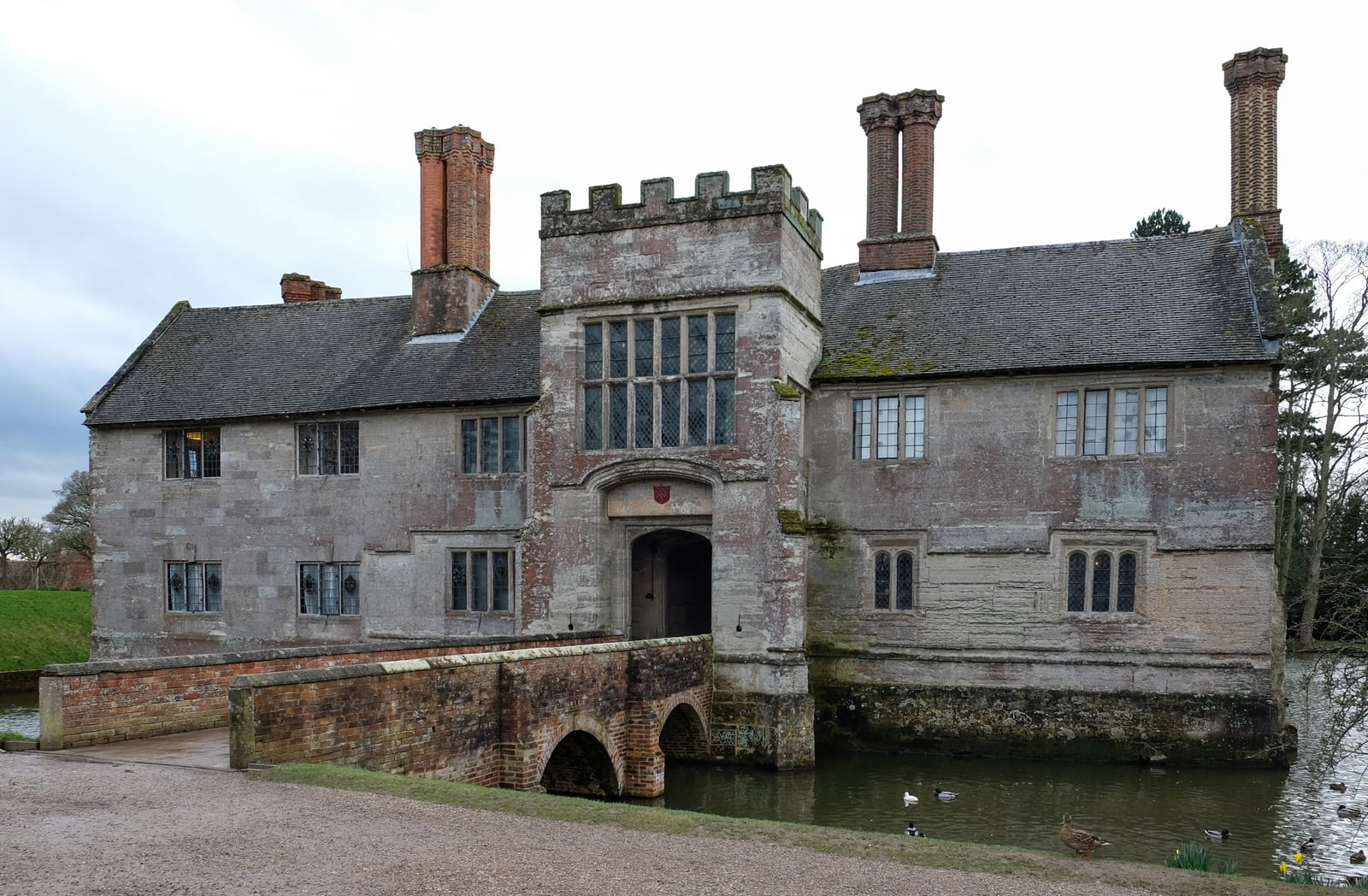
Rented by the Vaux sisters. In the October 1591 raid ten Jesuits stood in a sewer hide in ankle-deep icy water for four hours while Anne Vaux stalled the searchers in her nightgown and Southwell stripped his vestments at the altar. The searchers took twelve gold pieces and breakfast and left.
Coughton Court
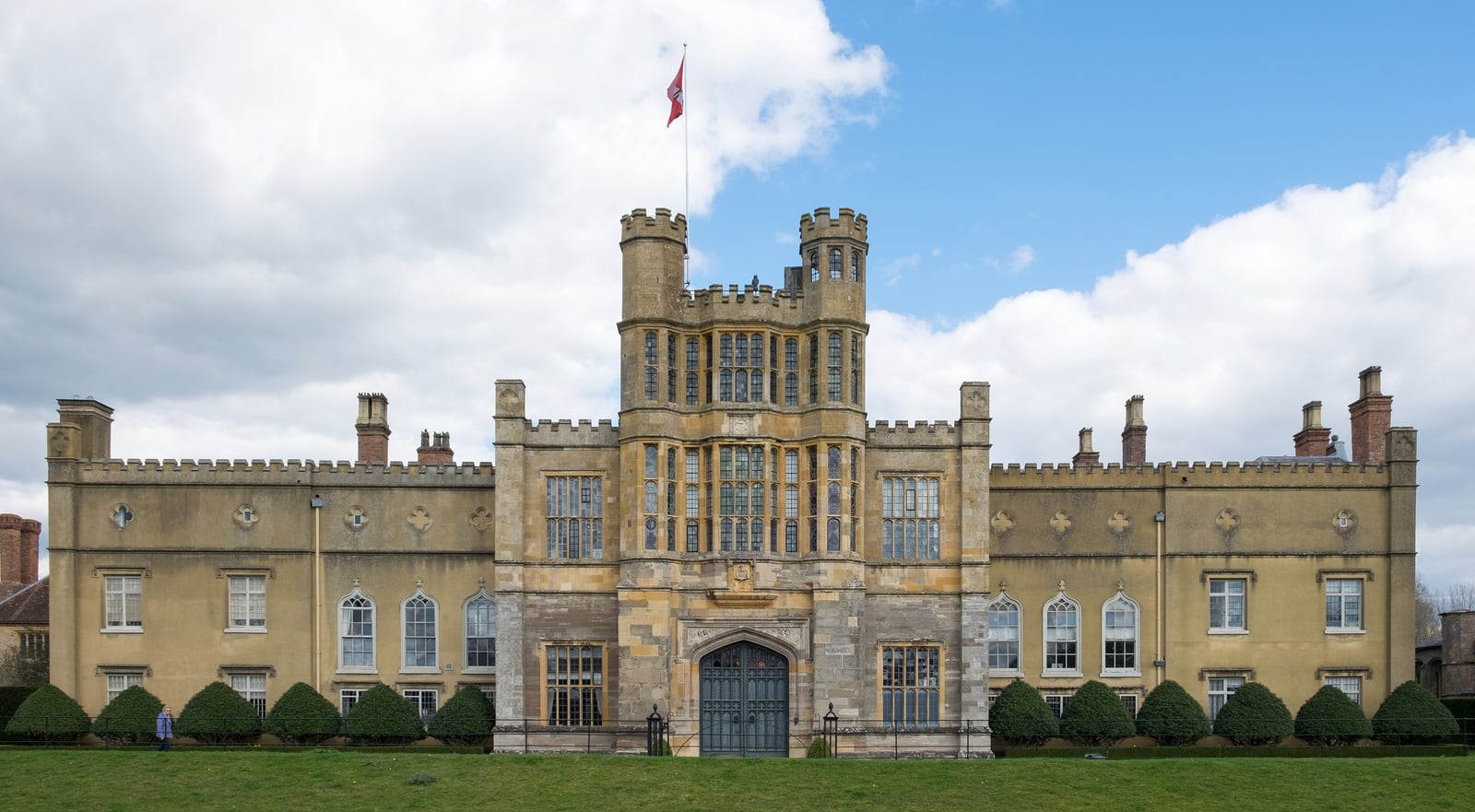
The Throckmortons. Owen’s double hide in the Tower Room. Here Lady Digby, Garnet and the Vaux sisters waited for news on 6 November 1605; Garnet “marvelled that they would enter into such wicked actions”.
Lapworth
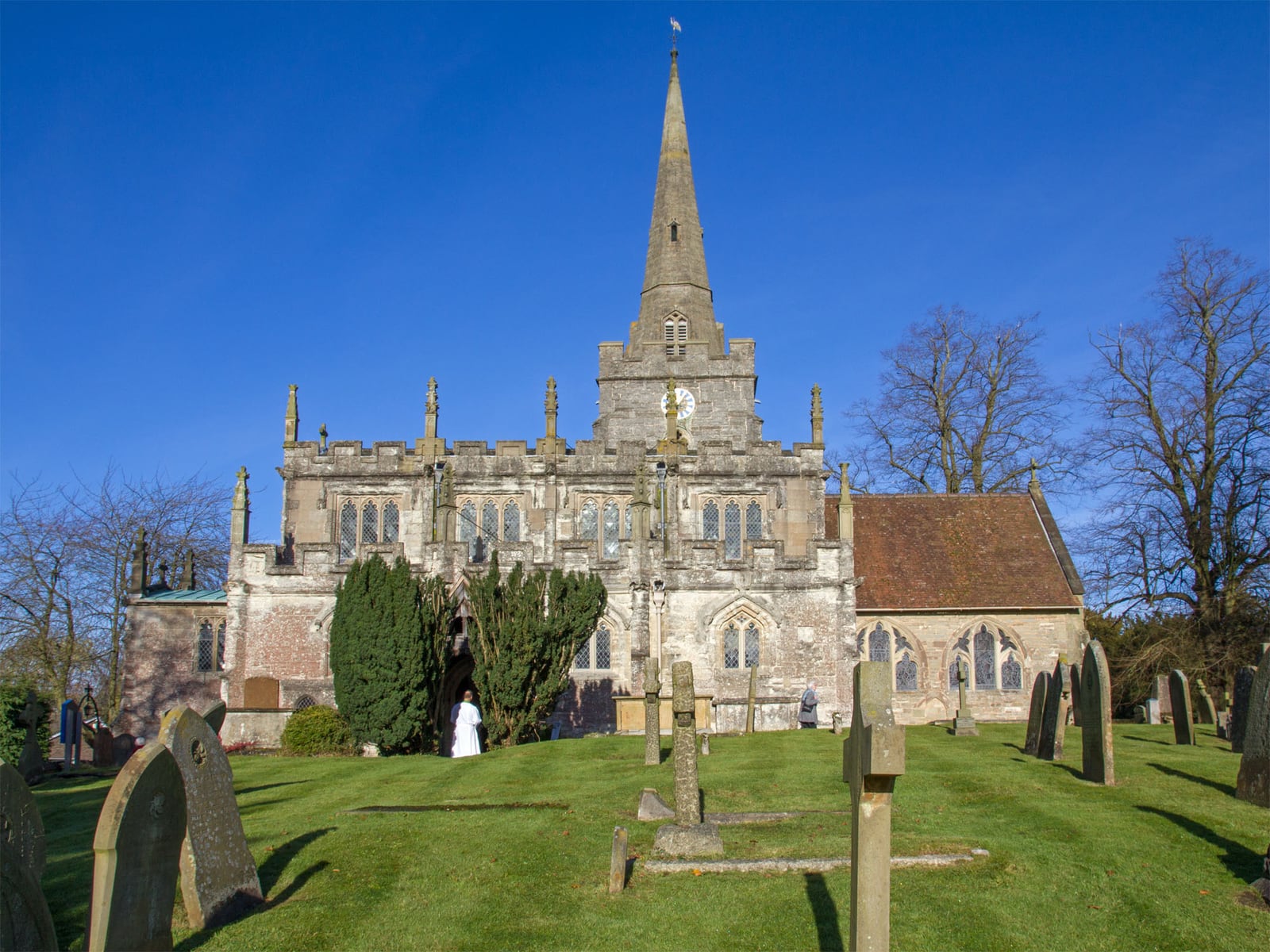
Catesby’s birthplace. Sir William Catesby harboured Campion here and was tried for it in Star Chamber in 1581 with Tresham and Lord Vaux. No source reached gives the date or length of the stay. About twelve miles from Stratford.
Norbrook
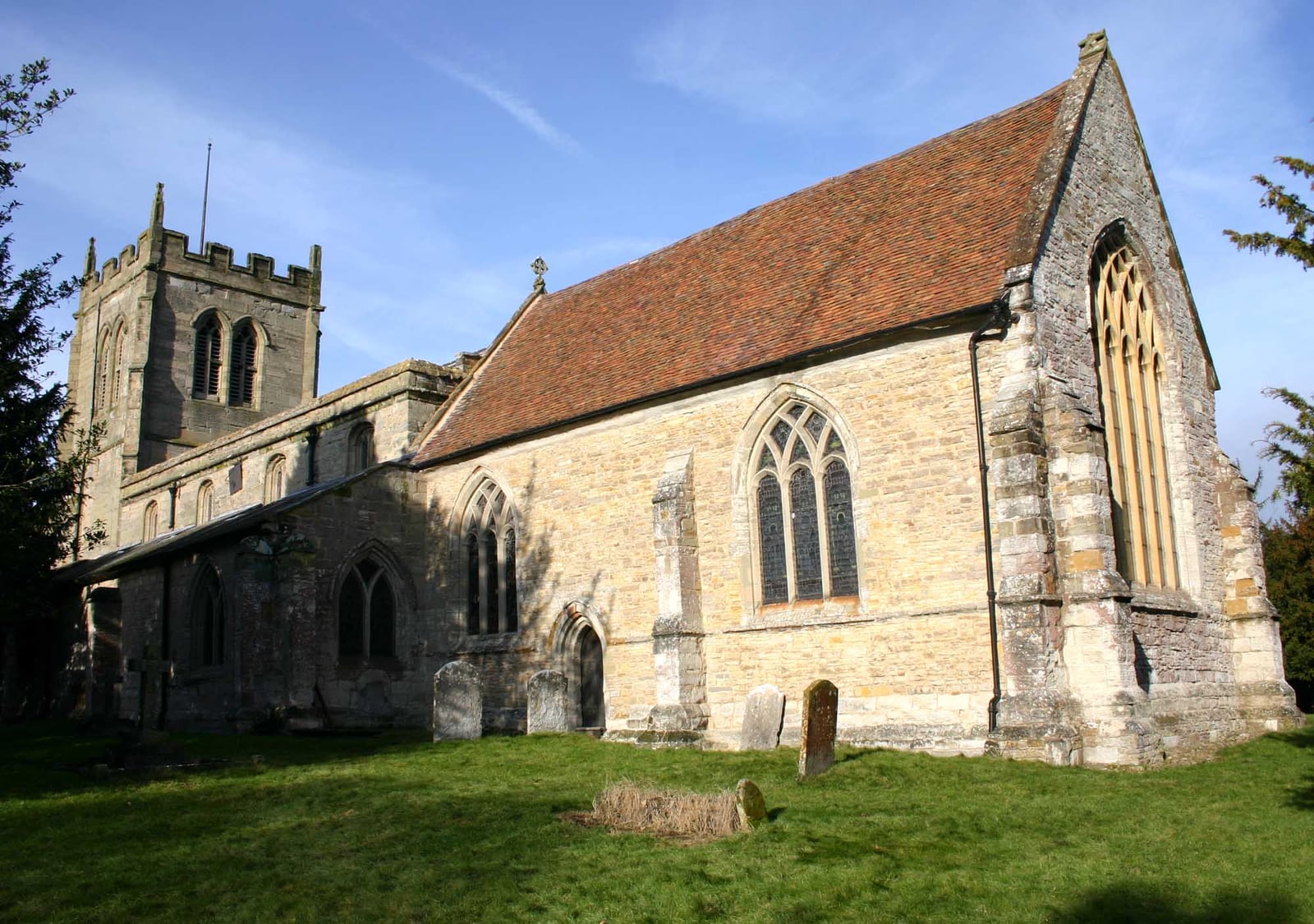
Near Snitterfield. John Grant’s “noted refuge for priests and often visited by pursuivants”. The fleeing plotters collected arms here on 6 November 1605. Grant paid pursuivants “with cracked crowns sometimes, and with dry bones”.
Clopton House
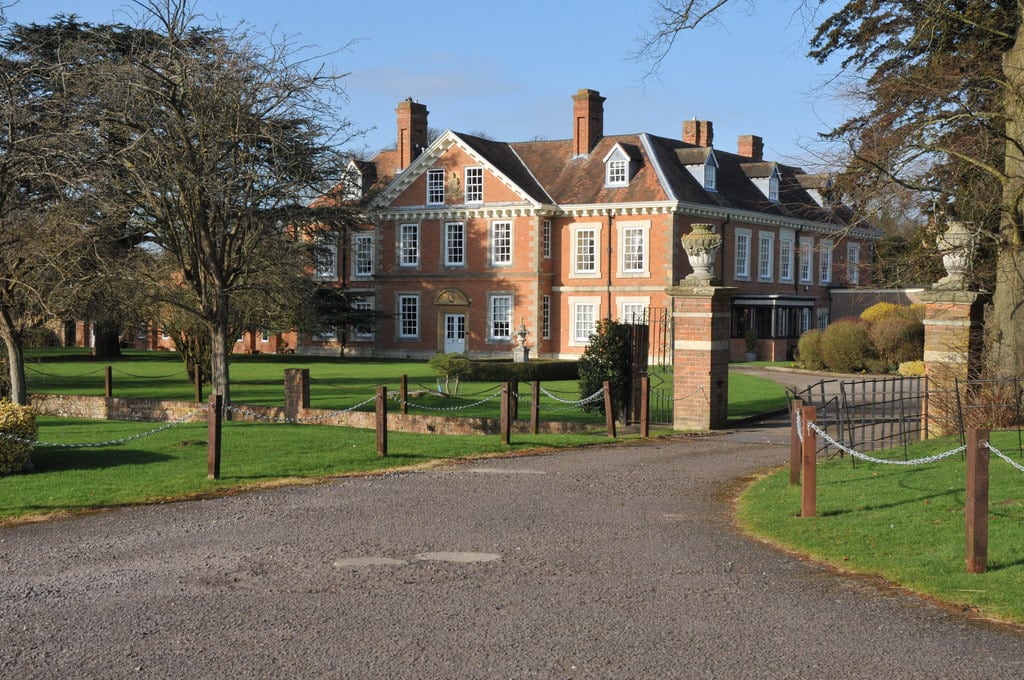
A mile from Stratford. Rented by Ambrose Rookwood in 1605 at Catesby’s request. After the Plot the Stratford authorities searched it and seized chalices, crucifixes, vestments and Latin books, inventoried and valued on 20 February 1606.
Huddington Court
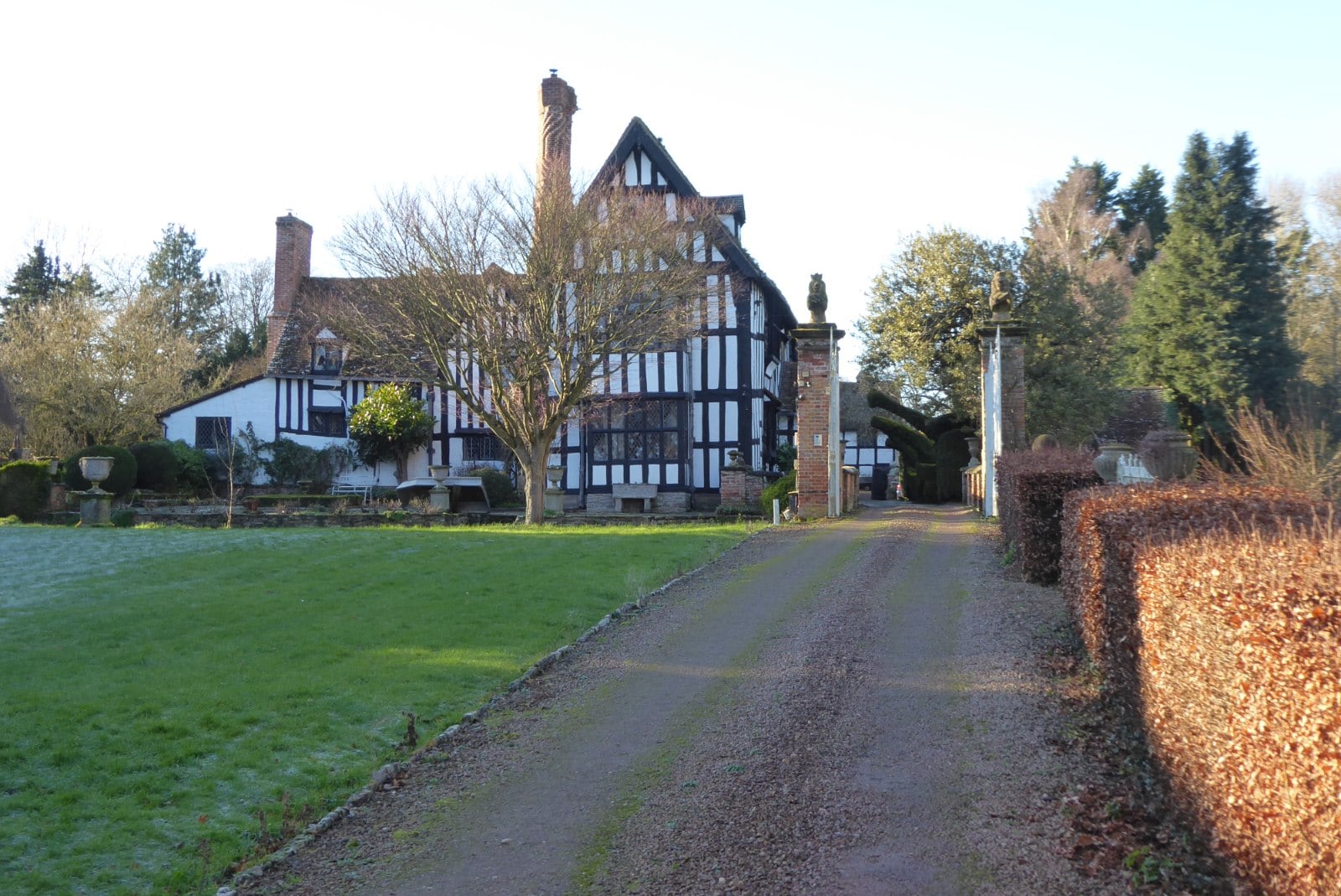
The Wintour home over the Worcestershire border. The plotters arrived on 6 November 1605 and left next morning. Owen built a hide inside a hide here; a priest scratched “past cark, past care” on a window in 1603.
Hindlip
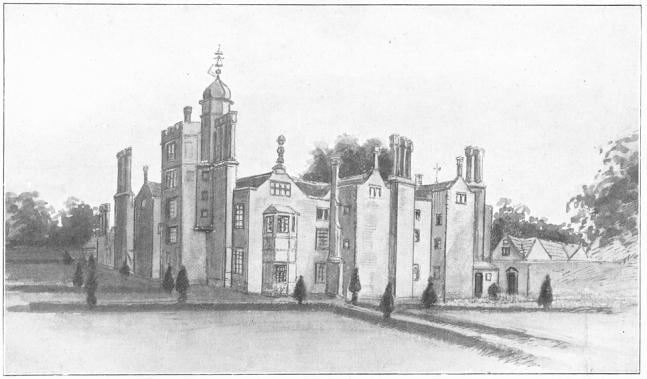
Eleven hides, most of them stores for vestments, candles and beads. Garnet and Oldcorne held out in a chimney hide for about a week in January 1606, fed caudle and broth through a reed; Owen and Ashley came out after four days with one apple between them.
Harvington Hall
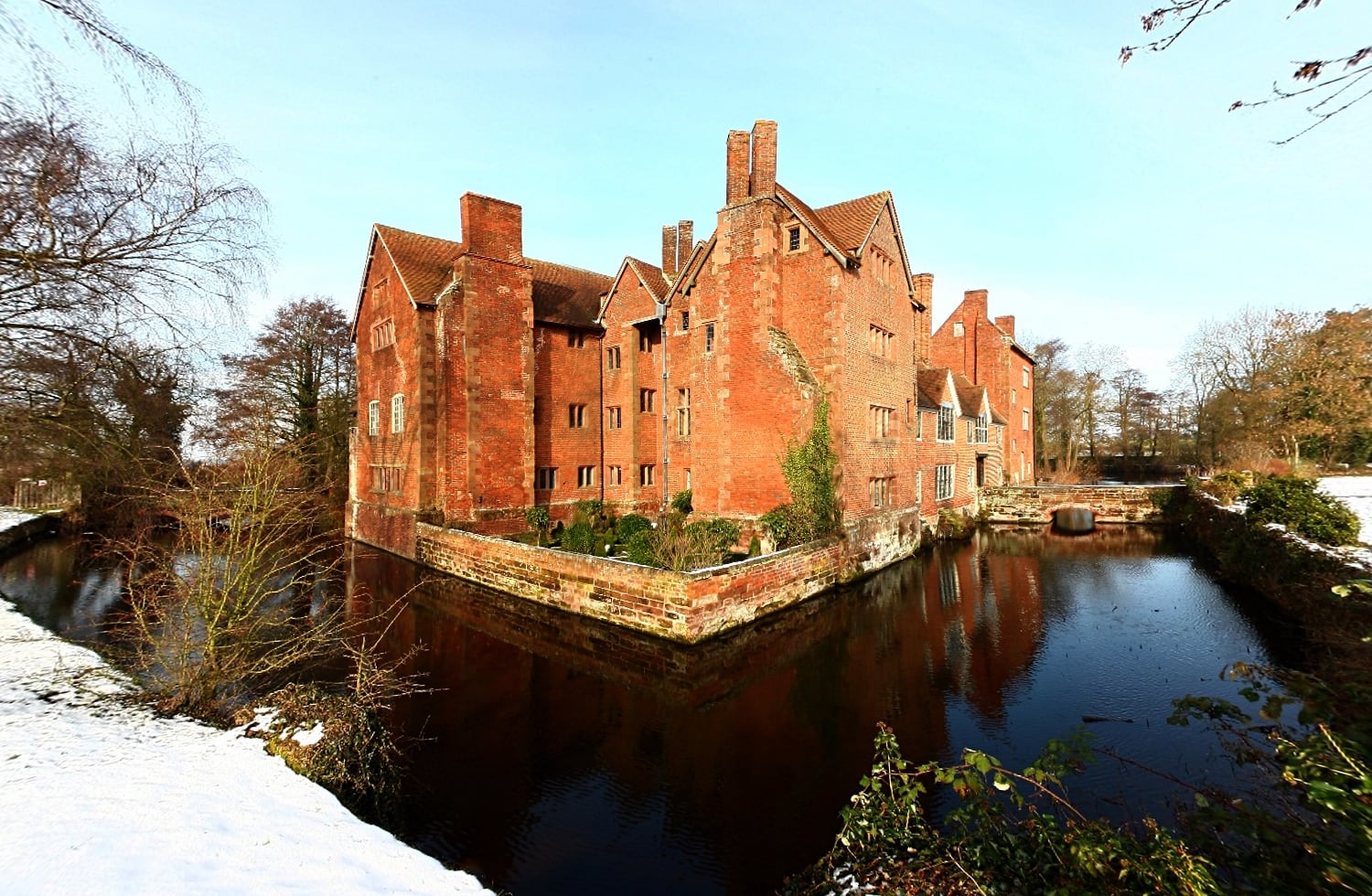
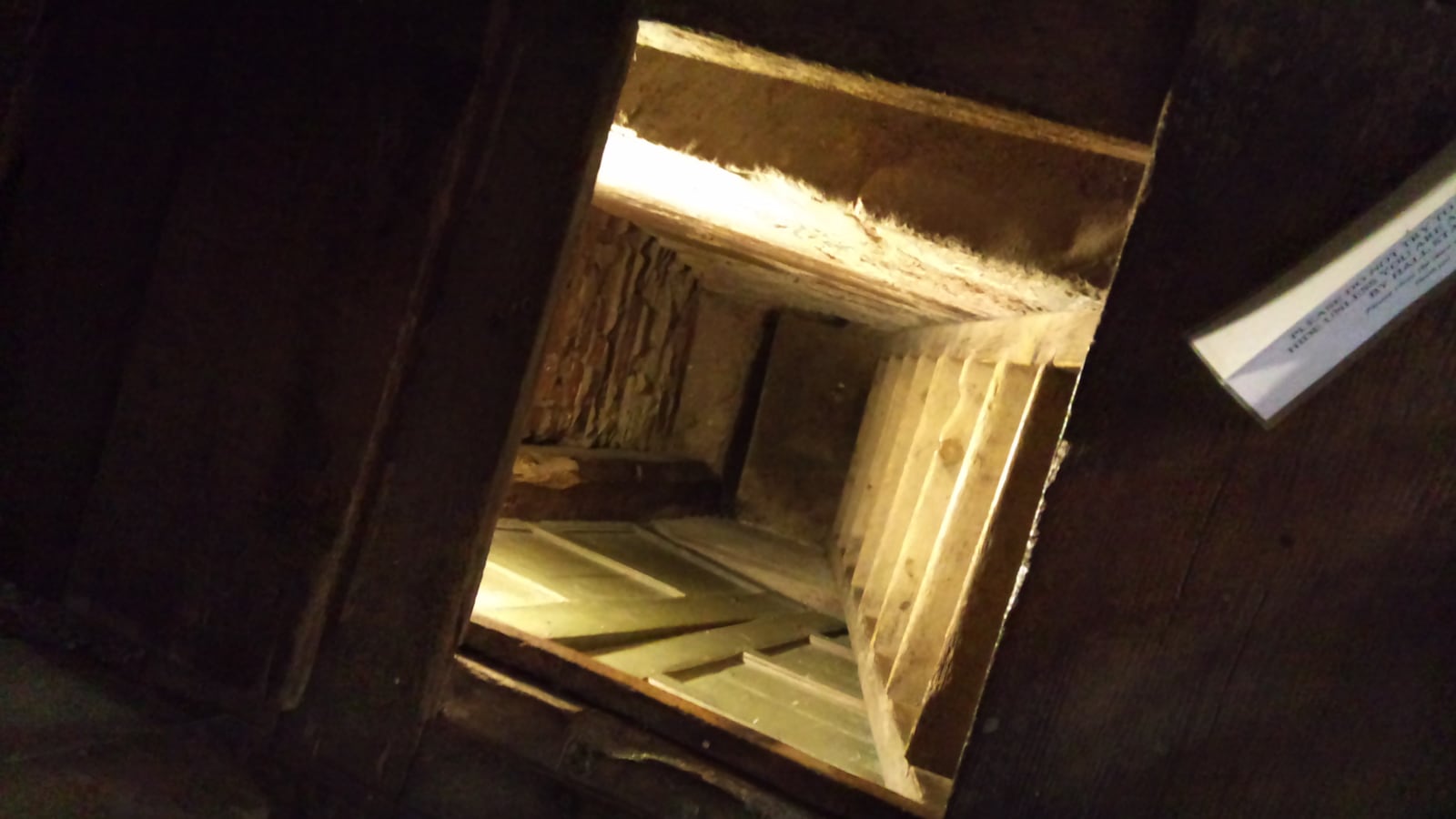
Near Kidderminster. Seven surviving hides, the country’s finest set: a swinging-beam hide in a book-cupboard wall, a bread-oven hide in the kitchen chimney with an extra layer of earth so a priest would not burn.
Sources: Gunpowder Plot Society, Baddesley; National Trust, Coughton; Wikipedia, Robert Catesby; Gunpowder Plot Society, Grant; Gunpowder Plot Society, Rookwood; Shakespeare Blog, Gunpowder; Wikipedia, Huddington Court; Gunpowder Plot Society, Hindlip; Harvington Hall.
The secret life
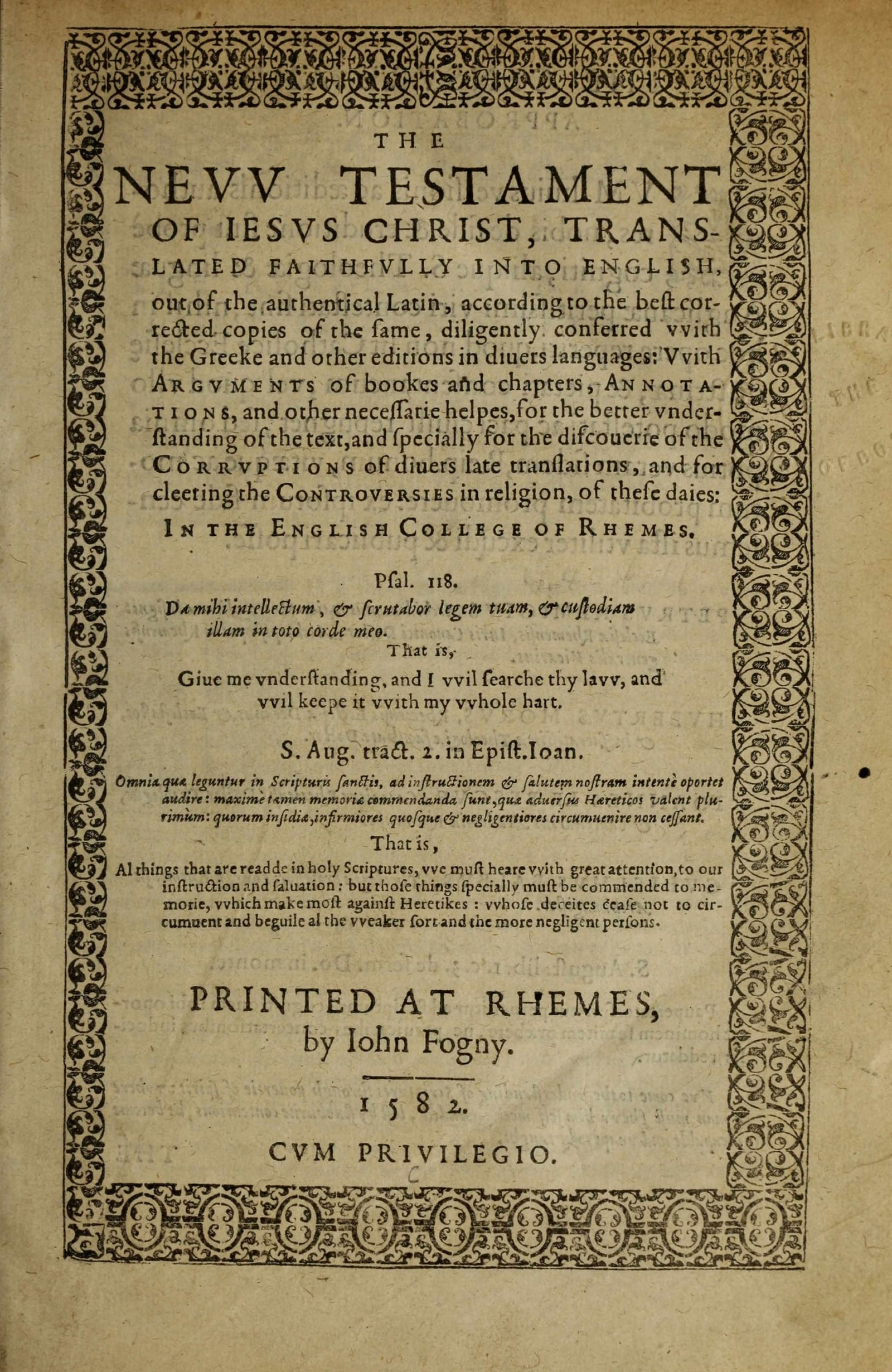
Mass before dawn in an upper room. A resident priest passing as tutor, steward or gardener. Vestments and chalice in a “secret corner” distinct from the “conveyance” that held a man. Rosaries and Agnus Deis that were themselves evidence of a crime: an Agnus Dei round his neck helped hang Cuthbert Mayne in 1577. Smuggled books: Persons’s Christian Directory and the Rheims New Testament of 1582, which Fulke’s hostile 1589 parallel edition made widely available. William Byrd’s three Masses, printed undated without a printer’s name, one bifolium per partbook to aid concealment.
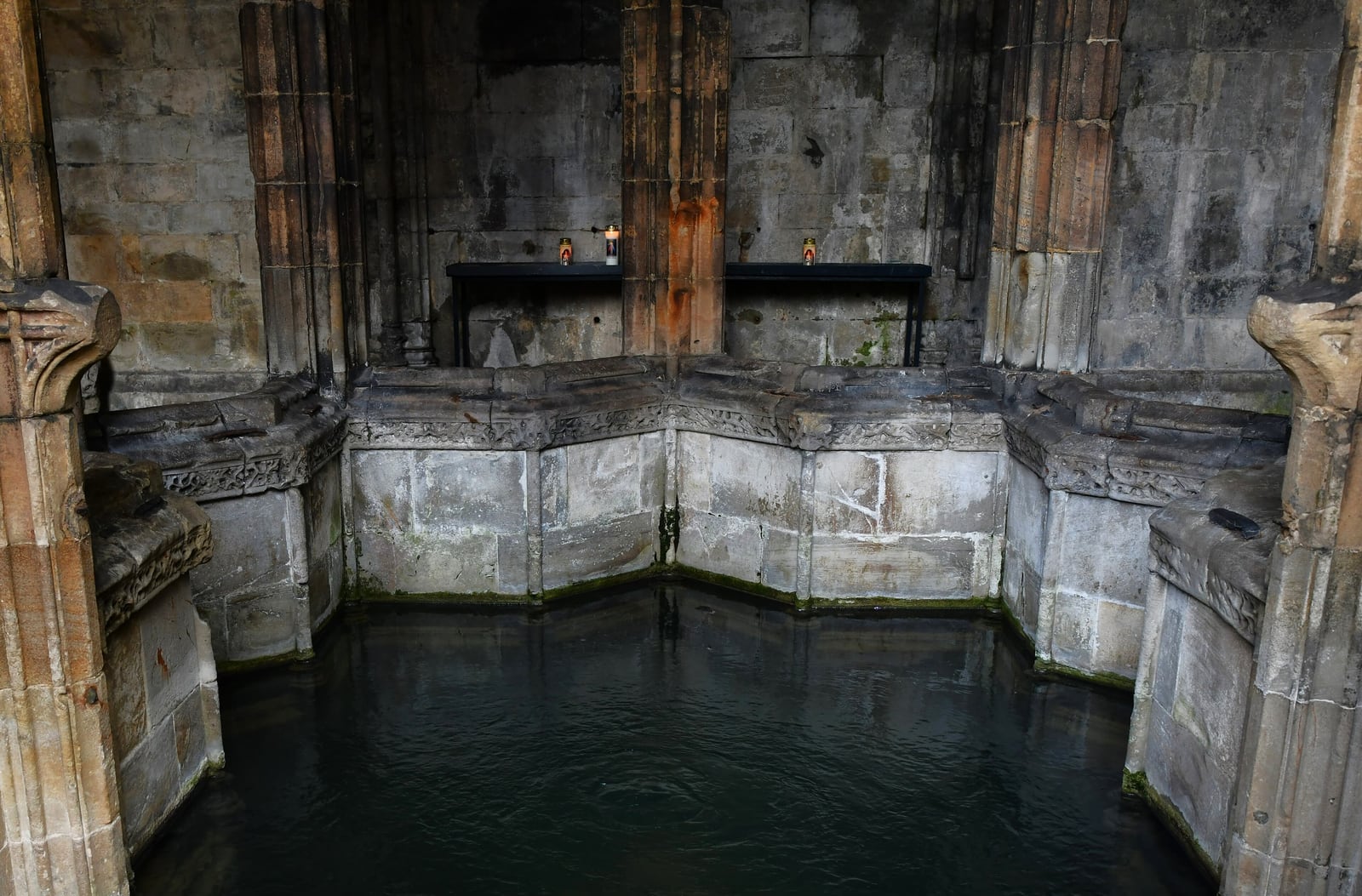
The documented inventory of a raided house, from the Hindlip and Clopton seizures: a chalice, crucifixes, vestments, Latin books, candles, beads. Pilgrimage to St Winefride’s Well at Holywell, the one British shrine with continuous pilgrimage through the Reformation, where Garnet led a barefoot party in 1605 and about 1,400 gentry gathered in 1629.
Behind it all, the loss of the old religion of the dead: chantries dissolved in 1547, prayers for the dead cut in 1552, and in Stratford itself the Guild Chapel Doom, Christ enthroned with the damned driven into hell’s mouth, limewashed when John Shakespeare was chamberlain and still faintly visible in 1641, forty feet from the schoolroom.
Sources: Catholic Encyclopedia, Agnus Dei; Wikipedia, Cuthbert Mayne; Wikipedia, Douay-Rheims; Wikipedia, William Byrd; Wikipedia, St Winefride’s Well; SBT, The Great Doom.
London’s Catholic geography
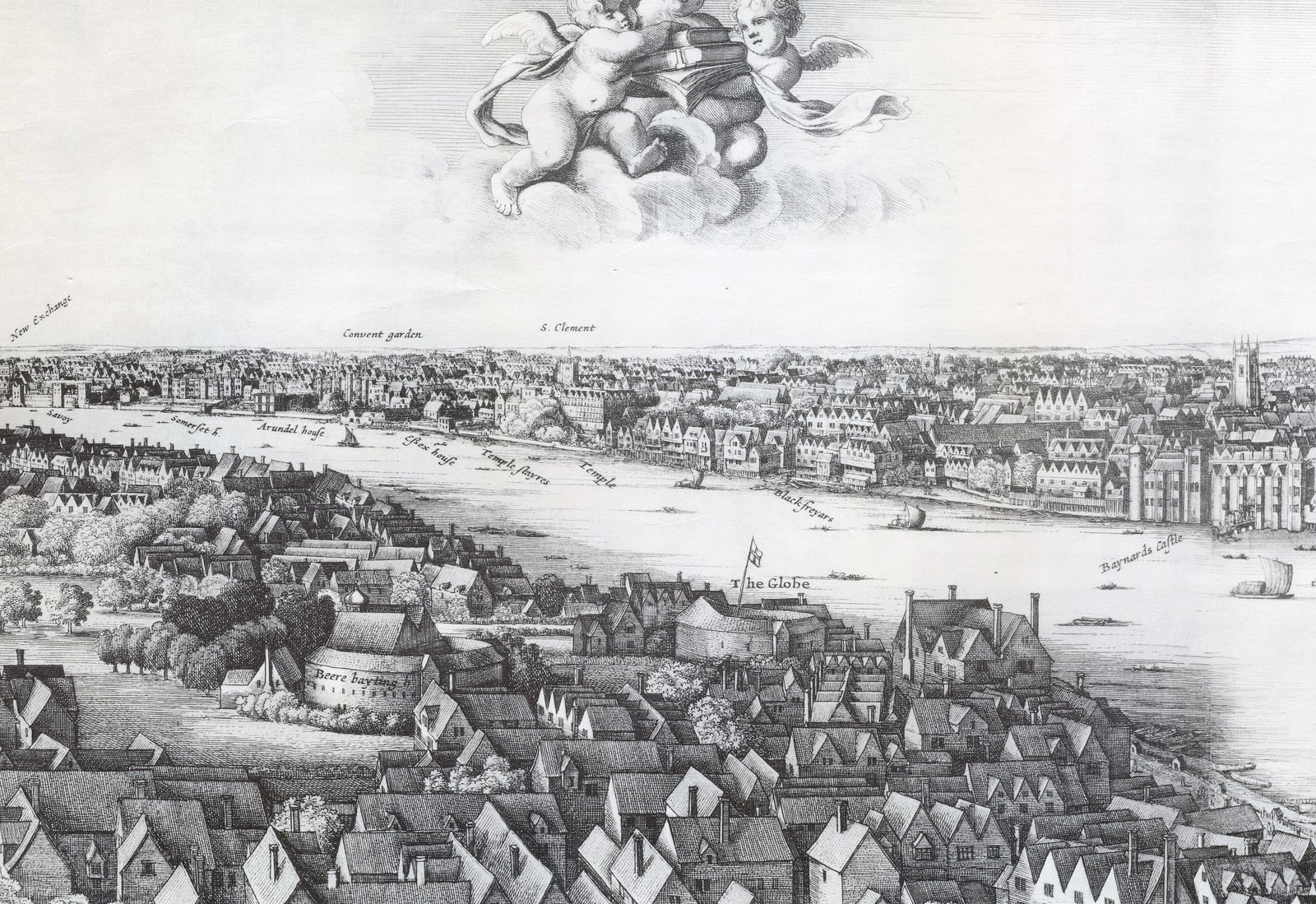
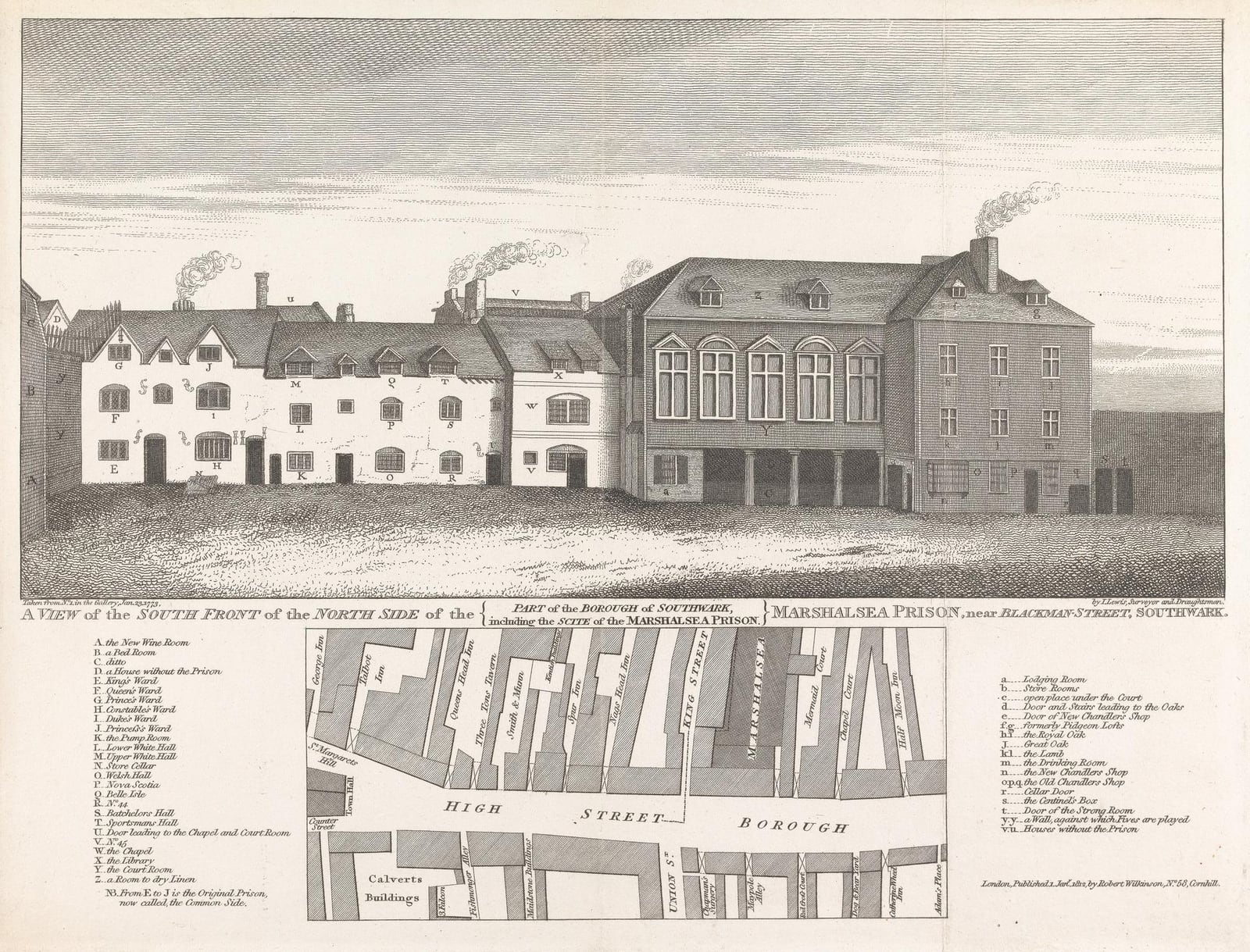
The Clink and the Marshalsea stood in the same liberty as the Globe, where bribed gaolers let priests say Mass. Blackfriars had its gatehouse. In Holborn and Gray’s Inn Lane, Swithun Wells and Edmund Gennings were hanged on a gibbet outside Wells’s own house on 10 December 1591 after a Mass raid. Southwell was chaplain at Arundel House in the Strand, not in Southampton’s household. Westminster held the Gatehouse, Topcliffe’s house and Old Palace Yard. At the Duck and Drake inn near the Strand the first five plotters swore their oath on a prayer book and heard Gerard’s Mass, Gerard not knowing the purpose.
The theatre’s real Catholics
Ben Jonson for twelve years: conversion in Newgate in 1598, dinner with the plotters, the consistory summons of 1606, the return to the Church with a full chalice drained in May 1610. Thomas Lodge, whose Rosalynde became As You Like It, left England in 1606 to escape persecution. The sonneteer Henry Constable converted about 1591 and died at Liège. William Byrd, cited for recusancy from 1584, kept his place in the Chapel Royal. Anthony Munday, the ex-informer. Jonson’s arc is the best-documented Catholic decade of a working playwright and a natural foil for a fictional Shakespeare.
Sources: Wikipedia, The Clink; Wikipedia, Marshalsea; Wikipedia, Swithun Wells; Wikipedia, Southwell; Wikipedia, Gunpowder Plot; Wikipedia, Ben Jonson; Wikipedia, Thomas Lodge; Wikipedia, Henry Constable.